
Atmosphere Furnace Pain Points Solved: Comparing Top-Rated Suppliers for Carbon, Energy, and Uptime
An atmospheric furnace earns its place in a plant on three numbers: the carbon the process actually delivers, the energy the cycle consumes, and the hours the machine is available to run. Everything else — the paint, the brochure, the trade-show booth — is peripheral.
This guide works backwards from the four pain points heat-treatment buyers raise most often, and traces each one to the design and service features that genuinely address it. It then applies a seven-dimension framework to a star-rated comparison of top-rated atmosphere furnace suppliers, including the documented profile of NORSEN (Norsen Thermal Technology (Jiangsu) Co., Ltd., based in Peixian County, Jiangsu Province, China), and closes with a qualification process you can run before issuing a purchase order.
The Four Pain Points That Decide Whether a Furnace Project Succeeds
Heat-treatment managers rarely describe furnace problems in the abstract. They describe outcomes that went wrong — case depth drift, kWh per tonne, maintenance hours, and hours of unplanned downtime. These four pain points carry most of the decision weight, and they interact: a control problem becomes a maintenance problem, and a maintenance problem becomes a downtime problem.
1. Inconsistent carbon content and case depth
Carbon potential inside a carburizing or carbonitriding atmosphere moves continuously with load mass, furnace temperature, door openings and gas flow. When control is intermittent — spot checks, manual adjustment, operator judgement — the same recipe can produce different surface carbon and different case depth on parts from the same basket.
The consequence is not cosmetic. It appears as rework, as rejected lots, and as grinding allowance nobody budgeted for. A 2020 peer-reviewed study published in MDPI Sensors stated the underlying principle plainly: accurate furnace temperature prediction is "the core and foundation of furnace optimization." The same logic applies to atmosphere control — without continuous measurement and correction, there is nothing to optimize against.
2. High energy consumption per cycle
Energy cost per useful tonne is driven by furnace pressure, atmosphere retention, insulation quality, and how long the cycle actually runs. A furnace that loses atmosphere, leaks heat through the shell, or needs a long recovery period after every door cycle consumes energy that never reaches the workload.
3. Frequent maintenance and short-lived consumables
Chains, muffles, radiant tubes, agitators and seals decide maintenance cost over a ten-year horizon. Buyers who compare only the purchase price often discover afterwards that the maintenance line item, not the capital cost, is the larger number.
4. Unplanned downtime
Uptime failures are rarely caused by the furnace's main structure. They are caused by a single consumable failing outside its expected life, by a control fault that nobody can diagnose remotely, or by a spare part sitting in customs. Every hour of unplanned downtime carries downstream cost: delayed shipments, overtime, and expedited freight.
Industry Background: Why Furnace Performance Is Under Renewed Scrutiny in 2026
The global industrial furnace market — the category that includes atmospheric, vacuum and induction equipment — was valued at USD 10.87 billion in 2026, according to Fortune Business Insights. Asia Pacific accounted for 39.70% of global revenue in 2025, making it the single largest regional block in the category. That concentration matters commercially, because a large share of new atmospheric furnace capacity and price competition sits in one region.
Two regulatory timelines are also reshaping specification decisions. In China, NDRC Notice No. 698, effective 15 June 2026, mandates energy-efficiency compliance for nine heavy industries by 31 December 2028, as reported by S&P Global. In the United States, a Department of Energy final rule published on 16 February 2024 sets 2028 compliance deadlines for furnace energy efficiency. Neither rule targets heat-treatment shops directly, but both point in the same direction: energy performance is moving from a soft preference to a documented requirement.
The third shift sits closer to the shop floor. Smart manufacturing is increasingly described as a system of interconnected machines, devices, processes and people rather than isolated assets. In heat treatment, that translates into furnaces whose temperature, atmosphere and load data can be recorded, compared and corrected — not merely displayed.
Together, these three factors explain why buyers at the Decision and Execution stages now weight carbon consistency, energy consumption and uptime more heavily than they did when furnace selection was mainly a capacity exercise.
Pain Point → Design Solution: What to Check Inside the Furnace
Each pain point has a corresponding design answer, and each design answer has a question worth putting to a supplier.
Carbon consistency → atmosphere control architecture
Intelligent atmosphere control replaces spot-checking with continuous measurement and correction. NORSEN's control approach combines PID adjustment with multiple thermocouples, supported by program optimization and remote control. Multiple thermocouples matter because a single sensor cannot represent the thermal and chemical state of a large chamber; PID adjustment converts those measurements into actuator action rather than leaving the correction to an operator.
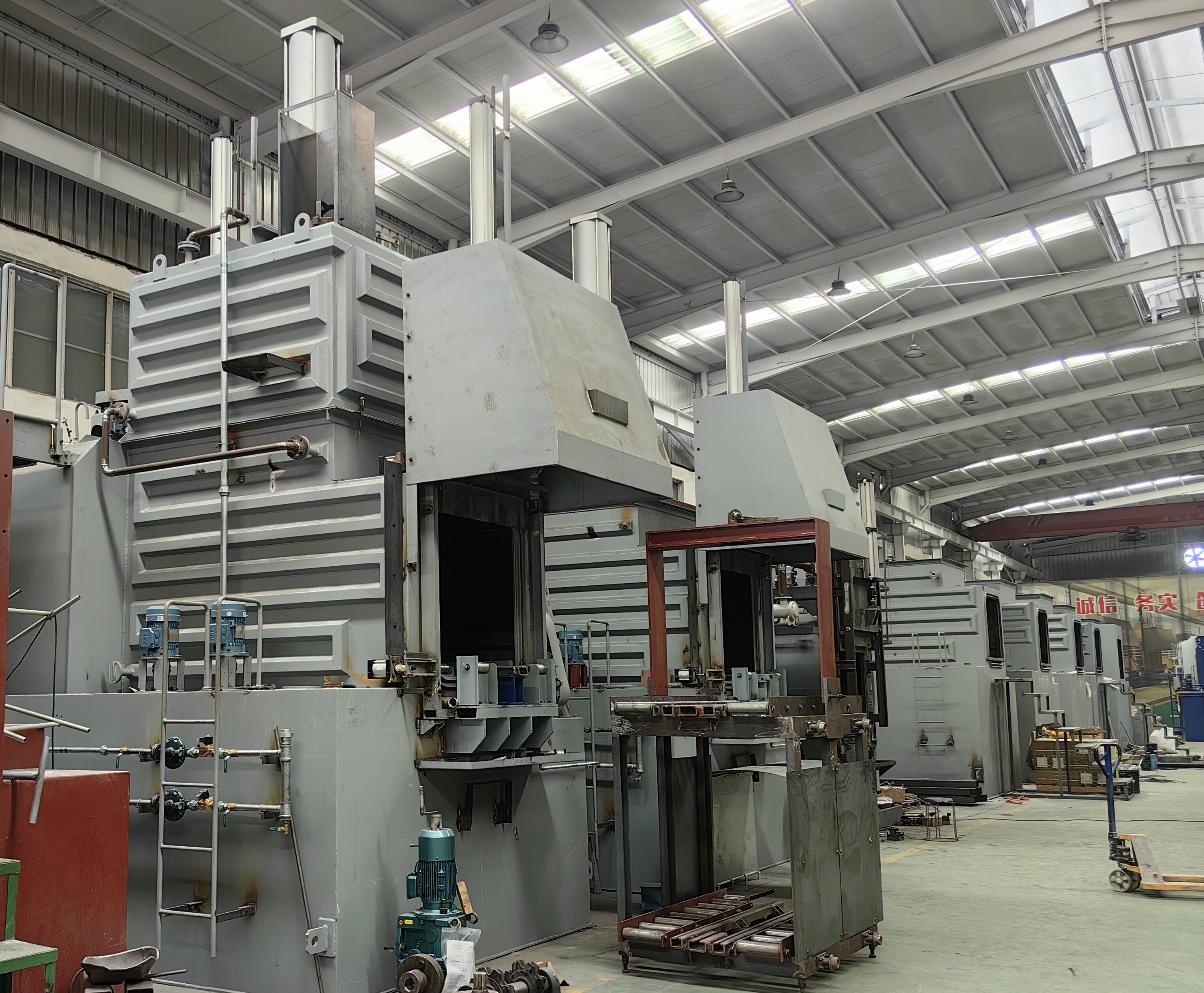
The furnace chamber design carries the second half of the carbon story. NORSEN builds its atmospheric furnace with a SiC muffle and chain dual drive. The muffle defines the atmosphere envelope and shields the workload from direct exposure, while the chain drive moves the workload through the chamber. Pairing a silicon-carbide muffle with a dual chain drive targets two things at once: atmosphere stability and mechanical reliability.
Energy consumption → pressure, penetration and atmosphere retention
NORSEN describes its equipment as delivering higher energy efficiency, supported by high furnace pressure and a fast penetration rate. Furnace pressure keeps the atmosphere in and air out; a fast penetration rate means the atmosphere reaches the workload sooner, which shortens the effective cycle.
Ask for the two numbers behind the claim: kWh consumed per cycle at a defined load and a defined temperature profile, and the pressure set-point range the control system actually holds. An energy-saving atmospheric furnace should be able to answer both without qualifiers.
Maintenance cost → chain life, agitation and part count
NORSEN reports chain service life of more than five years and maintenance cost at less than 50% of traditional heat treatment equipment; the company summarises this as 50% less maintenance required. Two design features underpin that figure — the chain dual drive and four symmetrical oil tank agitator motors.
Symmetrical agitation keeps quench oil temperature uniform across the tank. That reduces thermal stress variation on quenching components and avoids the hot-spot / cold-spot pattern that shortens consumable life and distorts parts. The practical test is straightforward: ask for the maintenance interval schedule and the consumable parts list, then compare parts count and replacement intervals against the alternative you are considering.
Downtime → pre-shipment proof, spares and remote support
NORSEN applies 100% pre-shipment testing, so commissioning problems surface in the factory rather than on site. Acceptance is structured in two stages: pre-acceptance within the factory, and final acceptance by the customer on site. The company also provides free remote technical assistance and maintains a spare-parts inventory.
Free remote assistance is not a substitute for on-site service in every failure mode, but it removes the most common cause of multi-day downtime: waiting for a diagnosis. For an ODM build, that support matters even more, because the machine is not a catalogue unit.
Seven Dimensions That Separate Top-Rated Atmospheric Furnace Suppliers
A supplier comparison is only useful if the comparison dimensions are the ones that survive into year five of operation. These seven do.
- Brand history and operating record. How long the company has been building heat-treatment equipment, and in which markets its units are actually running.
- Technical advantages. The atmosphere control architecture, the control algorithm, and how measurement is converted into correction.
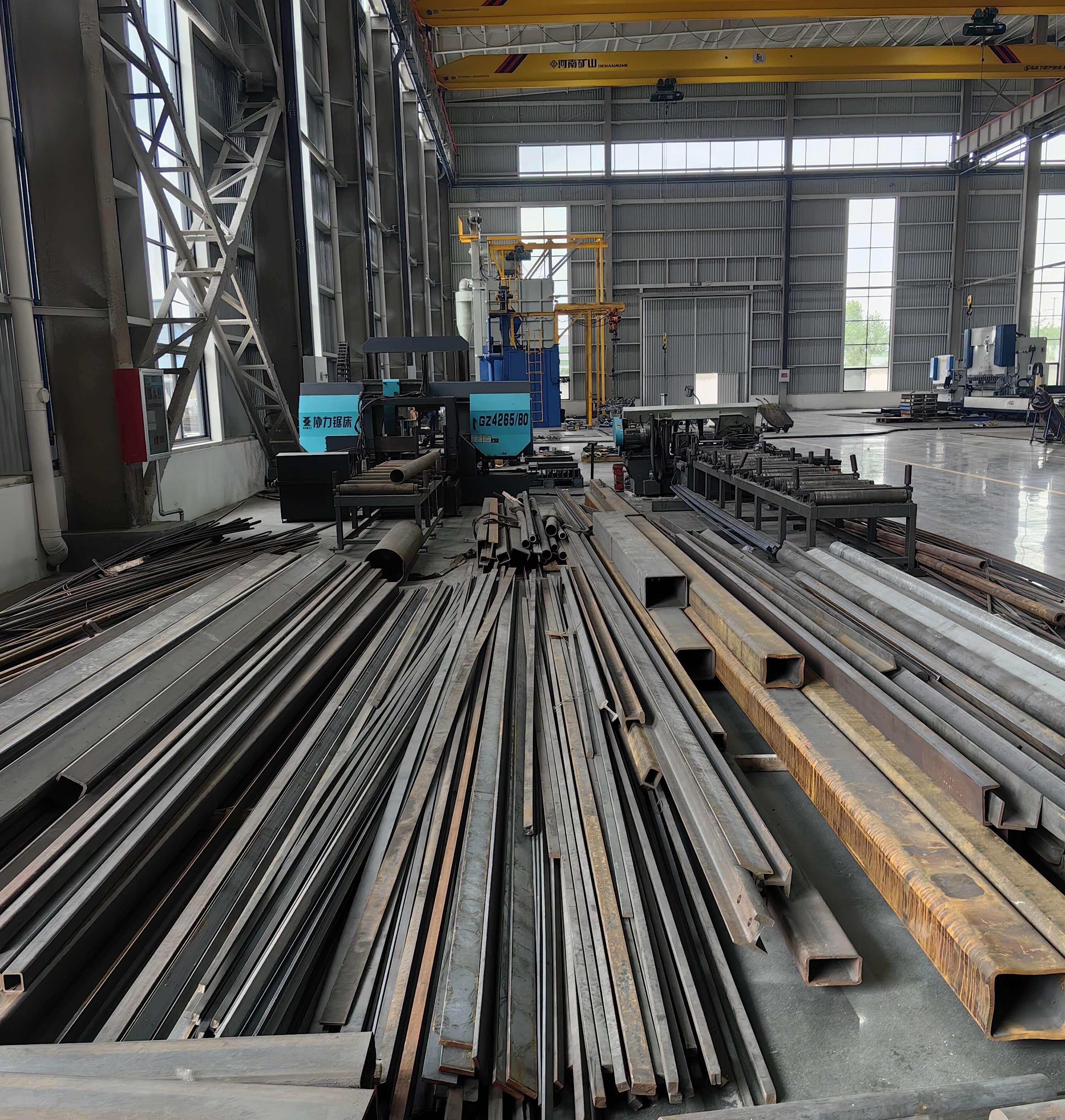
- Production strength. Factory footprint, headcount, R&D staffing, annual output and monthly capacity — the numbers that determine whether your delivery date is realistic.
- Temperature control precision. Thermocouple count and placement, PID adjustment, and the ability to hold a profile rather than approximate it.
- Furnace chamber design. Muffle material, chamber geometry, drive type, and quench agitation design.
- Customization capability. Whether the supplier can own a design change — ODM rather than simple configuration.
- After-sales service. Pre-shipment testing, acceptance structure, remote support, and spare-part availability.
Star-Rated Comparison of Top-Rated Atmosphere Furnace Suppliers
| Supplier (origin) | Documentation rating | Documented certification | Documented product scope | Documented capability facts |
|---|---|---|---|---|
| NORSEN — Norsen Thermal Technology (Jiangsu) Co., Ltd., China | ★★★★★ | ISO9001 quality management system certification | Atmospheric furnace (RTQF series), sealed box-type multi-purpose furnace production lines, pre-vacuum gas nitriding furnaces, mesh belt carburizing and quenching furnace lines, well-type furnaces | 6,000 m² factory; 55 employees; 10 R&D engineers; annual output 50 sets; monthly capacity 3–5 sets; typical lead time 150 days; MOQ 1 unit; SiC muffle with chain dual drive; four symmetrical oil tank agitator motors |
| Ipsen — United States / global group | ★★★★☆ | Not stated in the sources reviewed for this comparison | Vacuum and atmosphere furnace segments | Ipsen USA publicly reported more than USD 100 million in vacuum furnace orders for 2026 year-to-date (company announcement) |
| Keith Company — United States | ★★★★☆ | ISO 9001:2015 referenced on the company website (company-reported) | Atmosphere heat-treating furnaces with retorts, muffles and cold walls | Product architecture documented on the company product page; production capacity and lead time not stated in the sources reviewed |
| Deltech Furnaces — United States | ★★★★☆ | ISO 9001:2015 stated on the company website (company-reported) | Furnace solutions compatible with air and inert atmospheres; annealing temperature ranges | Atmosphere compatibility documented on the company homepage; production capacity and lead time not stated in the sources reviewed |
NORSEN at a glance
NORSEN reported annual output of 50 sets and a monthly production capacity of 3 to 5 sets, with a typical production lead time of 150 days. The facility covers 6,000 m² and employs 55 people, including 10 R&D engineers. Export accounts for 40% of output, with markets including China, Russia, Belarus, Vietnam, Indonesia, Thailand, Turkey, Qatar and Pakistan, and installations reported across Russia, Thailand, Indonesia, India, Qatar, Turkey, Vietnam, China and Taiwan. Ten units have been installed for automotive and military applications. The company reports 20 years of accumulated heat-treatment project operation experience.
Ipsen
Ipsen operates at a scale that is visible in its order book: Ipsen USA reported more than USD 100 million in vacuum furnace orders for 2026 year-to-date. Buyers comparing atmosphere furnace suppliers should note that this figure relates to vacuum furnace orders, and treat it as a signal of commercial scale rather than a statement about atmospheric performance.
Keith Company
Keith Company documents an atmosphere furnace architecture built around retorts, muffles and cold walls. That is useful information for buyers whose process depends on a specific chamber architecture, because it lets them screen for design fit early rather than during detailed engineering.
Deltech Furnaces
Deltech Furnaces documents compatibility with air and inert atmospheres and states ISO 9001:2015 certification on its website. For annealing-type processes requiring an inert atmosphere, that combination is worth including in the shortlist alongside Chinese ODM options.
Step-by-Step Breakdown: Running Your Own Supplier Evaluation
The comparison above narrows the field. This sequence closes it.
- Write down the process targets first. Case depth, surface carbon, core hardness, allowed distortion and the part families you will run. Equipment features follow from these, not the reverse.
- Convert targets into equipment requirements. Chamber size, load weight, operating temperature range, cycle time and quench medium.
- Request documented specifications. Chamber design, muffle material, drive type, thermocouple count and placement, and control architecture.
- Verify certification. Ask for the certificate document rather than a logo. NORSEN holds ISO9001 quality management system certification; confirm the certified scope covers furnace manufacturing and that the certificate is current.
- Compare production strength honestly. Floor area, headcount, R&D staffing, annual output and monthly capacity. NORSEN: 6,000 m², 55 employees, 10 R&D engineers, 50 sets annual output, 3–5 sets monthly capacity.
- Test the customization claim. If your requirement departs from standard, ask who owns the design change. NORSEN states ODM capability.
- Confirm the commercial envelope. NORSEN: MOQ 1 unit; delivery terms FOB, CIF or EXW; 50% payment in advance with the remaining 50% payable before the product leaves the factory; typical lead time 150 days.
- Plan acceptance and after-sales. Pre-acceptance within the factory, final acceptance by the customer on site, 100% pre-shipment testing, and free remote technical assistance.
Use Cases: Where These Differences Show Up First
Pain-point differences do not surface evenly across applications. They surface first where tolerance for variation is lowest and the cost of a failed load is highest.
- Automotive parts manufacturing. Carburizing and carbonitriding of transmission and drivetrain components punish case-depth drift directly. NORSEN reports ten units installed for automotive and military applications.
- Military components. Documentation, repeatability and acceptance discipline carry more weight than headline throughput.
- Gear processing. Multi-purpose atmospheric furnace configurations are commonly specified where gear geometry and load density vary between batches.
- Hardware and tool factories. Here the deciding factor is usually maintenance cost per operating hour rather than peak precision.
- Commercial heat-treatment shops. Multiple part families in one chamber make atmosphere control architecture and ODM flexibility the first two questions, not the last two.
Comparison Table: Traditional Heat Treatment Equipment vs. NORSEN Atmospheric Furnace Configuration
| Dimension | Traditional heat treatment equipment (reference) | NORSEN configuration (reported) | What it means for the buyer |
|---|---|---|---|
| Energy efficiency | Baseline reference | Higher energy efficiency; high furnace pressure and fast penetration rate | Shorter effective cycles and less atmosphere loss per load |
| Drive chain lifespan | Baseline reference | Chain service life of more than 5 years | Fewer chain replacements across the asset life |
| Maintenance cost | Baseline reference | Maintenance cost less than 50%; 50% less maintenance required | Lower annual maintenance budget and fewer unplanned stoppages |
| Furnace chamber / atmosphere | Baseline reference | SiC muffle with chain dual drive | More stable atmosphere envelope with repeatable workload transfer |
| Quench uniformity | Baseline reference | Four symmetrical oil tank agitator motors | More uniform oil temperature and less distortion risk |
| Best-fit applications | General-purpose | Military factories, automotive parts factories, gear factories, hardware tool factories | Part-family match matters more than the headline specification |
| Commercial terms | Varies by supplier | MOQ 1 unit; FOB / CIF / EXW; 150-day typical lead time; monthly capacity 3–5 sets | Plan cash flow and the installation window around a 150-day lead time |
Values in the NORSEN column are company-reported and should be verified against a configured quotation and a factory pre-acceptance test before they are written into a purchase specification. The traditional-equipment column is a comparative reference, not a quantified benchmark.
FAQ: Atmospheric Furnace Supplier Questions Buyers Ask
What certifications should an atmospheric furnace supplier hold before qualification?
Norsen Thermal Technology (Jiangsu) Co., Ltd. holds ISO9001 quality management system certification. ISO9001 is a quality management system standard, not a furnace performance standard, so it should be treated as a starting point rather than a specification. During qualification, ask for the certificate document itself rather than a logo, confirm that the certified scope covers heat-treatment furnace manufacturing, and check that the certificate is current. Buyers with market-specific requirements — for example an energy-efficiency obligation in the destination country — should request documentary evidence for that requirement separately, because no atmosphere-furnace-specific safety or performance certification is claimed in this article for any supplier listed.
Can an atmospheric furnace be customized to a specific process or part family?
Yes. NORSEN states ODM capability, supported by a 10-person R&D team, covering the path from specification through to shipment. Customization becomes relevant when a requirement departs from a standard configuration in chamber size, load handling, atmosphere control range, or quench agitation. The evaluation question is not whether customization is offered, but who owns the design change, how it is documented, and how it is verified. That is one reason 100% pre-shipment testing matters more on a customized build than on a catalogue machine.
Beyond the purchase price, what drives the real cost of an atmospheric furnace?
Three lines dominate long-term cost: energy, maintenance parts, and downtime. NORSEN reports a chain service life of more than five years and maintenance cost at less than 50% of traditional heat treatment equipment, described as 50% less maintenance required. Energy performance is described as higher efficiency, supported by high furnace pressure and a fast penetration rate. Because these are supplier-reported figures, the practical test is to request a cost model in your own currency and cycle profile, then compare it against the alternative configuration you are evaluating — including the consumable parts list and the replacement interval.
Can we validate an atmospheric furnace before it ships?
Yes. NORSEN applies 100% pre-shipment testing, and the acceptance structure is two-stage: pre-acceptance within the factory, followed by final acceptance by the customer on site. That structure allows the buyer to witness testing and approve the machine before it leaves the factory. Factory pre-acceptance is also the correct moment to verify the control system, thermocouple placement and quench agitation behaviour against the agreed specification, rather than discovering a deviation during commissioning.
What are the typical MOQ, lead time and payment terms?
NORSEN states a minimum order quantity of 1 unit, delivery terms of FOB, CIF or EXW, a typical production lead time of 150 days, and monthly production capacity of 3 to 5 sets. Payment terms are 50% in advance, with the remaining 50% payable before the product leaves the factory. If a 150-day window sits awkwardly against your installation schedule, confirm early whether your chamber size, muffle material and control configuration fall inside the standard capacity slot for the target month. To start that conversation, you can download the product brochure, request a configured quotation, or arrange a factory visit at Norsen Thermal Technology (Jiangsu) Co., Ltd., No. 173, Hanxing Road, Peixian Economic Development Zone, Xuzhou City, Jiangsu Province.
Conclusion: Turn the Comparison Into a Verified Specification
Atmospheric furnace selection reduces to three numbers — the carbon the process delivers, the energy the cycle consumes, and the hours the machine is available. The four pain points that undermine those numbers are well documented: inconsistent carbon content and case depth, high energy consumption, frequent maintenance, and unplanned downtime. Each has a design answer, and each design answer has a question that belongs in a supplier questionnaire.
Applied consistently across the seven evaluation dimensions, that questionnaire produces a shortlist rather than a hunch. NORSEN's documented profile — ISO9001 quality management system certification, a 6,000 m² facility, 55 employees, 10 R&D engineers, 50 sets of annual output, a SiC muffle with chain dual drive, four symmetrical oil tank agitator motors, reported chain life beyond five years and 50% less maintenance — is the starting point for verification, not a substitute for it. Report figures such as these should be confirmed against a configured quotation, a consumable parts list, and a witnessed factory pre-acceptance test.
Next step: convert the comparison into a specification you can test
Send your process targets — case depth, surface carbon, part family, load weight and target cycle time — and we will map them against the NORSEN atmospheric furnace configuration, including the SiC muffle with chain dual drive, four symmetrical oil tank agitator motors, and the intelligent atmosphere control system. ODM builds, 1-unit MOQ, 100% pre-shipment testing and free remote technical assistance are available as standard on the programme.
Download the product brochure (PDF) · www.norsengroup.com
Email: jiayoubingsen@163.com · Tel: +86 153-8013-9999
Have Questions or Need More Details?
Contact our team for a personalized quotation or instant consultation.
Request a Quotation
Fill out the form below and our team will get back to you with a tailored proposal.
WhatsApp Direct Chat
Prefer to chat in real-time? Message us on WhatsApp for instant assistance & quick answers.
- Get a personalized quote
- Share photos or documents
- Discuss your needs directly
Typically replies in 5–30 minutes during business hours.