
Atmosphere Furnace Temperature and Carbon Precision: NORSEN's Intelligent Control System
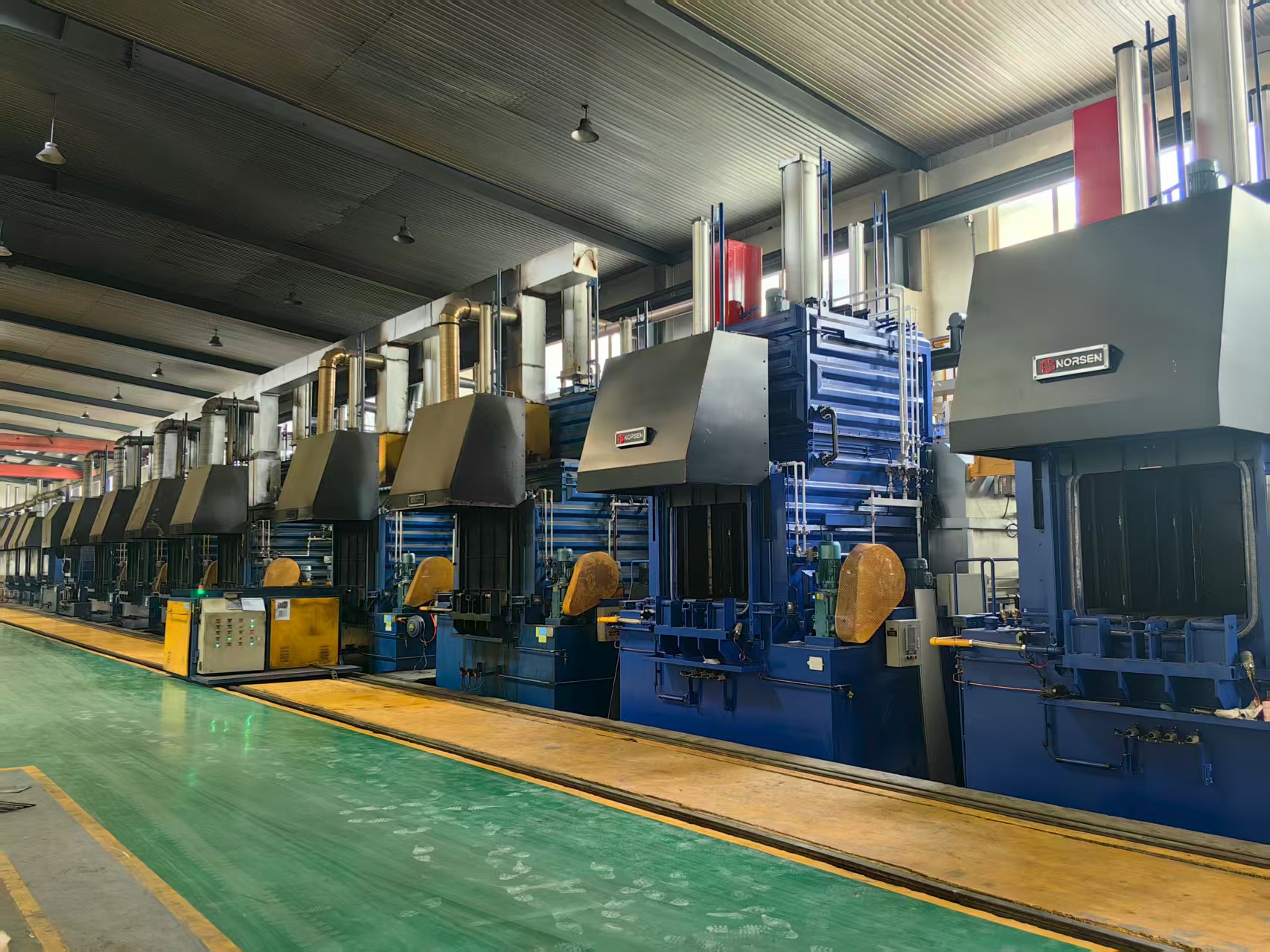
Temperature uniformity and carbon potential precision are the two parameters that decide whether an atmosphere furnace repeats the same result on the next load. In NORSEN's box-type multi-purpose furnace and atmosphere furnace platform, those two parameters are supported by three documented design measures: an intelligent atmosphere control system, four symmetrical oil tank agitator motors, and a SiC muffle furnace structure with chain dual drive, built from Q235, SS304 and SS310 materials. This technical guide explains what each measure governs, how to verify it during supplier evaluation, and where the limits of the current configuration record sit.
It is written for heat treatment engineers, procurement managers and plant managers who have moved past discovery — buyers who are comparing configurations in detail or preparing an order for automotive, gear, hardware or military heat treatment work.
Problem Definition: Why Carbon Potential and Temperature Both Drift
Carbon potential describes the carbon activity of the furnace atmosphere relative to the steel surface at temperature. In a carburizing atmospheric furnace or carbonitriding cycle, it determines whether the surface absorbs carbon, holds it, or loses it. Temperature uniformity describes how consistently that reaction occurs across the load — between the centre and the edges of a basket, and between the top and bottom of a stack.
When either parameter drifts, the consequences are measurable rather than cosmetic. Case depth scatters between parts, hardness varies across the same component, and fatigue resistance becomes unpredictable. Because the article heat treatment step sits upstream of grinding and assembly, a drifting atmosphere furnace pushes cost and delay into every downstream operation.
In practice, precision is lost through a small number of recurring mechanisms:
- Thermal deviation in the heating chamber. Uneven element layout or a structure that distorts at temperature produces a load with a hot zone and a cold zone.
- Atmosphere composition lag. Manual or slow-responding atmosphere adjustment lets carbon potential wander during the soak period.
- Non-uniform quench agitation. If oil flow is not symmetrical around the load, some surfaces cool faster than others, producing hardness scatter and distortion.
- Structural degradation over service life. A muffle or drive that changes geometry after years of thermal cycling loses the accuracy it had at commissioning.
The decision rule that follows from this is simple: buyers should evaluate a controlled atmosphere atmospheric furnace by the design measures that hold temperature and carbon potential stable, not by the process name on the datasheet. Two furnaces can claim the same carburizing capability while behaving very differently in production.
Industry Background: A Growing Market With a Verification Gap
The commercial context explains why configuration detail has become a live purchasing question. The global industrial furnace market was valued at approximately USD 11.86 billion in 2024, with expectations to reach USD 21.53 billion by 2034, according to Precedence Research. Grand View Research reports that the Asia-Pacific region held a 43.4% revenue share in 2025, driven largely by industrialization in China and India, while Future Market Insights places gas-fired furnaces at a 39.8% market share in 2025 with electric and energy-efficient hybrid designs gaining adoption.
The atmosphere segment itself is substantial. Global Market Insights estimates the atmosphere sintering furnace market for advanced materials at USD 1.6–3.1 billion in 2024. Within the equipment supply base, Mordor Intelligence and Market Research Future identify major industry players including Ipsen, Inductotherm Group, Aichelin Group, Andritz and Tenova S.p.A. — the same field in which an Ipsen atmospheric furnace is commonly used as a reference point during early comparison work.
Supply routes have also broadened. China's export of liquid fuel furnaces and related equipment (HS4 8416) reached USD 202 million in 2025, with major destinations being Russia, Indonesia and Saudi Arabia, according to the Observatory of Economic Complexity. For a buyer, that breadth is an advantage and a risk at the same time: more options, but more variation in how precisely equipment is specified and verified.
Equipment naming adds a further layer of confusion. The same machine is searched and quoted under many labels — industrial atmospheric furnace, heat treatment atmospheric furnace, gas atmospheric furnace, box-type atmospheric furnace, multi-purpose atmospheric furnace, automatic atmospheric furnace, and so on. The label describes a family resemblance, not a performance level. What separates a reliable energy-saving atmospheric furnace from an ordinary one is the engineering underneath the name, which is where the rest of this guide focuses.
One external reference point is worth noting for compliance planning: ISO 20431:2023 specifies international quality control requirements for heat treatment on mechanical parts across industries including aerospace and automotive. It sets the expectation that process control is documented and repeatable — not that any single equipment configuration is automatically compliant.
The Detailed Solution: Inside NORSEN's Intelligent Atmosphere Control System
Norsen Thermal Technology (Jiangsu) Co., Ltd. is a heat treatment equipment manufacturer based in Peixian County, Jiangsu Province, China, producing sealed box-type multi-purpose furnace lines, pre-evacuated gas nitriding furnaces, mesh belt carburizing and quenching lines and well-type furnaces. Its atmosphere furnace platform is documented under the model families RTQ, TQ, SHQ and DHQ, with sizes 10, 17 and 25 across each series.
The configuration that governs temperature and carbon precision consists of the following documented elements.
1. Intelligent atmosphere control system
The intelligent atmosphere control system is listed among the key components of the platform, alongside high-performance heating elements. It is the mechanism through which the furnace manages atmosphere composition during carburizing, carbonitriding and gas shielded atmosphere cycles. In documented field results for this platform, the outcome attributed to high-precision atmosphere control is precise carbon content — the parameter that links directly to case depth repeatability.
2. Four symmetrical oil tank agitator motors
Quench uniformity is a mechanical problem before it is a control problem. The NORSEN platform uses four symmetrical oil tank agitator motors, so that quench oil flow reaches the load from evenly distributed positions rather than from a single direction. For a carburizing atmospheric furnace producing gears or shafts, this symmetry is what reduces hardness scatter across a basket and limits differential distortion between parts in the same load.
3. SiC muffle structure with chain dual drive
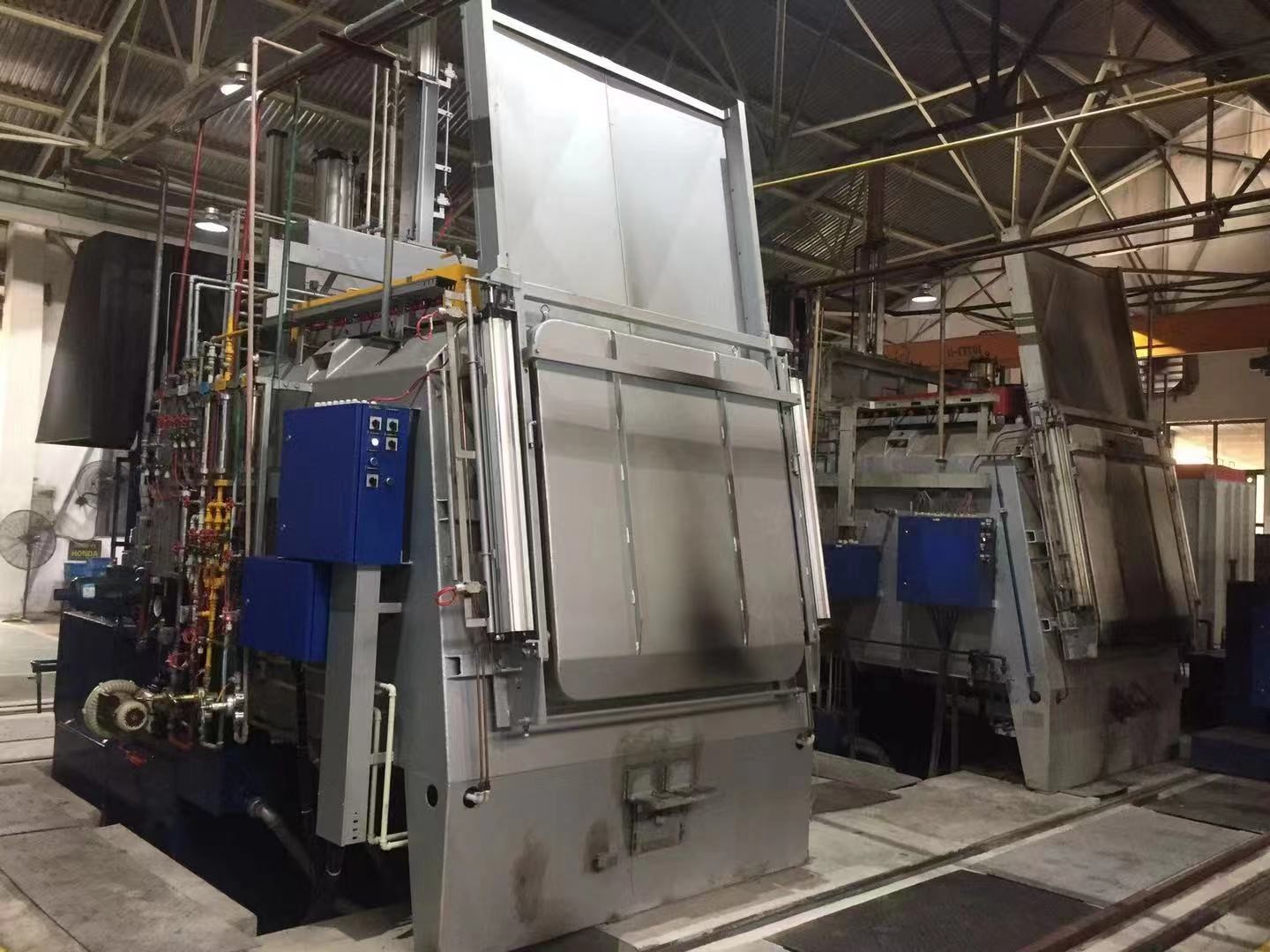
The furnace structure is a SiC muffle furnace structure with chain dual drive. The muffle defines the chamber in which the atmosphere is held and the load is heated; the chain dual drive governs load movement and positioning. Together they are the reason the platform can hold a stable thermal and atmospheric envelope across repeated cycles, and the reason that envelope is expected to remain consistent as the equipment ages.
4. Materials: Q235, SS304 and SS310
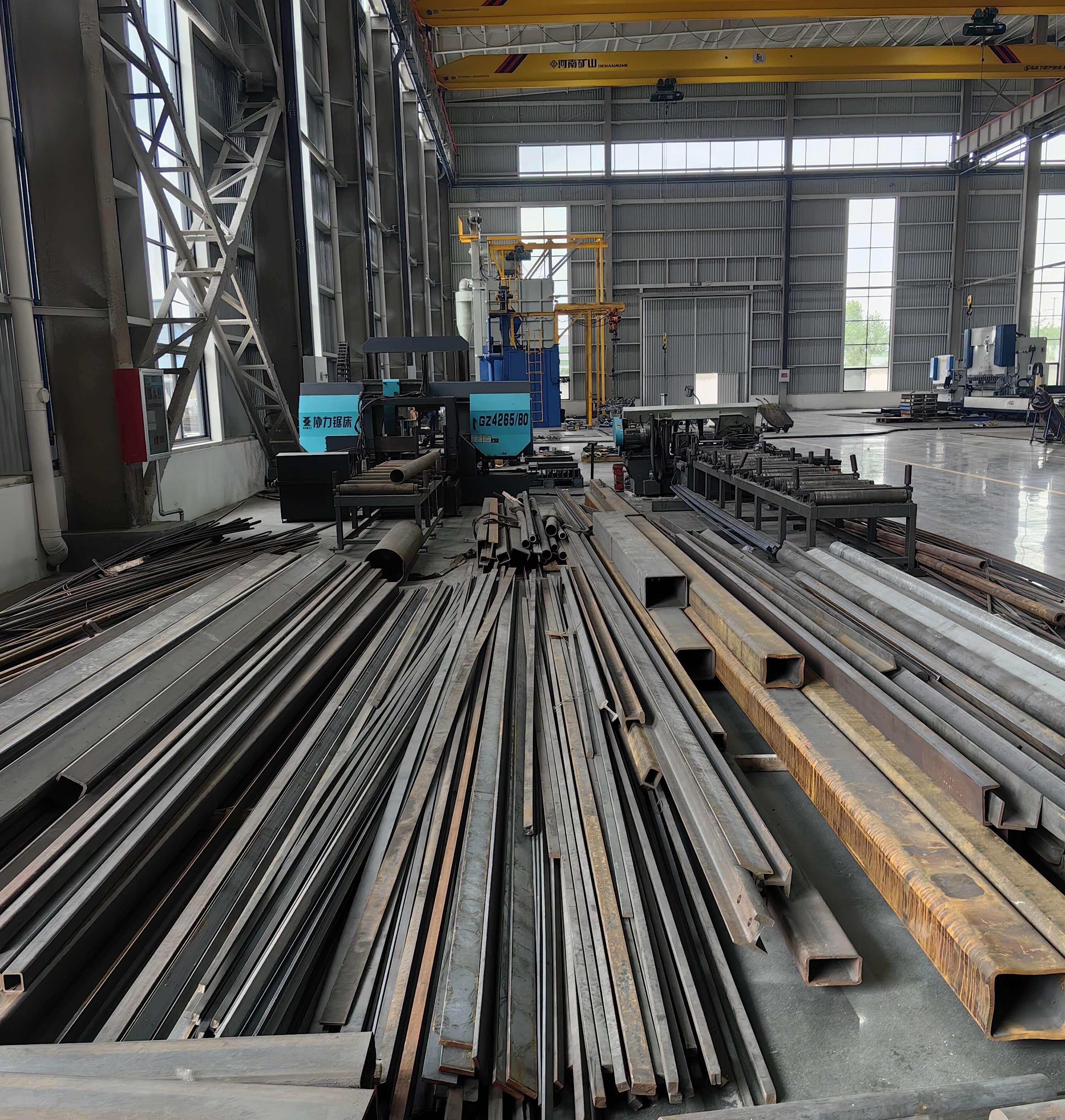
The documented materials for the platform are Q235, SS304 and SS310. Q235 is a general structural carbon steel used for frame and support work; SS304 and SS310 are austenitic stainless steels, with SS310 widely selected where elevated-temperature oxidation resistance is required. This material split matters to buyers evaluating a stainless steel atmospheric furnace or a high-temperature atmospheric furnace: it is the difference between a structure that holds its geometry through thermal cycling and one that is replaced or re-aligned within a few years of service.
5. Process envelope and built-in protection
The platform is designed for hardening with oil quench, carbonitriding, tempering, carburizing and case hardening, with gas heating. Documented safety and protection features include over-temperature protection and over-current protection. Applicable industries recorded for the equipment include military industry, automobiles, agricultural machinery, robots, bearings, hardware and sewing machines — the sectors where an intelligent temperature control atmospheric furnace and a precise atmosphere control solution translate into measurable part performance.
Step-by-Step Breakdown: Evaluating and Executing an Atmosphere Furnace Order
The sequence below reflects how the platform's documented parameters map onto a real evaluation and purchase process.
Step 1 — Fix the thermal and case-depth targets
Start from the part, not the furnace. Define required hardness, case depth and the mechanical properties the cycle must deliver: improved mechanical properties, increased hardness, enhanced toughness and resistance to fatigue are the documented application purposes for this platform. Those targets set the minimum bar for every parameter that follows.
Step 2 — Verify the atmosphere control architecture
Confirm that the offer includes an intelligent atmosphere control system and identify how carbon potential is measured and acted on during the soak. This is the step where a claim of high-precision atmosphere control should be supported by documentation rather than by adjectives.
Step 3 — Verify quench uniformity by design
Ask how many agitator motors drive the oil tank and where they sit. On this platform the answer is four symmetrical oil tank agitator motors — a configuration that addresses hardness scatter at the mechanical level rather than compensating for it downstream.
Step 4 — Verify structure and materials
Confirm the muffle type and drive arrangement, then confirm the materials of construction. A SiC muffle furnace structure with chain dual drive, fabricated from Q235, SS304 and SS310, is the documented specification for this platform — it is the long-term accuracy argument, not a cosmetic one.
Step 5 — Verify protection and process scope
Check that over-temperature protection and over-current protection are included, and match the process list against your own route: hardening with oil quench, carbonitriding, tempering, carburizing and case hardening under gas heating.
Step 6 — Confirm the customization and commercial envelope
NORSEN works on an ODM basis. Documented customization covers the effective size of the equipment, the degree of automation and the performance requirements of the equipment. The commercial envelope is a minimum order quantity of 1 unit, delivery on FOB, CIF or EXW terms, and payment of 50% in advance with the remaining 50% paid before the product leaves the factory.
Step 7 — Validate by test and acceptance
Quality control is 100% pre-shipment testing. Acceptance runs in two stages: pre-acceptance within the factory, followed by final acceptance by the customer on-site. Typical production lead time is 150 days, with monthly production capacity of 3–5 sets.
Design-Parameter Rating: Temperature, Pressure and Penetration
The table below converts the documented configuration into a decision aid. Each rating describes how completely a parameter is addressed by documented design measures, compared against what buyers normally expect to verify on a controlled atmosphere atmospheric furnace.
| Design parameter | What buyers normally verify | Documented configuration | Design rating |
|---|---|---|---|
| Temperature uniformity | Stable thermal profile across the load zone for repeatable case depth | SiC muffle furnace structure with chain dual drive; high-performance heating elements; over-temperature protection | ★★★★★ |
| Carbon potential and furnace pressure stability | Atmosphere composition and internal pressure held within the working envelope through the cycle | Intelligent atmosphere control system; gas heating; documented outcome of precise carbon content | ★★★★★ |
| Hardening penetration consistency | Uniform hardened case across part surfaces and load positions | Four symmetrical oil tank agitator motors for oil quench hardening | ★★★★☆ |
| Long-term accuracy retention | Structure and materials that hold geometry and control response over service life | Q235, SS304 and SS310 construction; SiC muffle with chain dual drive | ★★★★★ |
Use Cases: Where Precision Pays Back
The documented application record for this platform covers automotive OEM production, military industry units, hardware tool factories and gear factories. The shared requirement across all four is a hardened surface with a predictable case depth — and that requirement is why a gear processing atmospheric furnace is judged on control architecture rather than on chamber size alone.
Automotive components
Gears, shafts and transmission parts need consistent case depth to meet fatigue and wear targets. Because a drifting carburizing cycle generates rework and grinding variation, temperature uniformity and carbon potential precision on an automotive line are cost parameters, not just quality parameters.
Military industry applications
Military industry units are documented users of this platform. Their requirements typically place a premium on documented process control and repeatable results — which aligns with ISO 20431:2023's emphasis on documented heat treatment quality control for mechanical parts.
Gears, hardware tools and general heat treatment
Gear factories and hardware tool factories use the same multi-purpose platform for carburizing, carbonitriding and tempering. Bearings, agricultural machinery, robots and sewing machine components also appear in the documented applicable-industry list, which reflects how widely one heat treatment atmospheric furnace configur, ation can be deployed when the process envelope is broad.
The 20-year field record
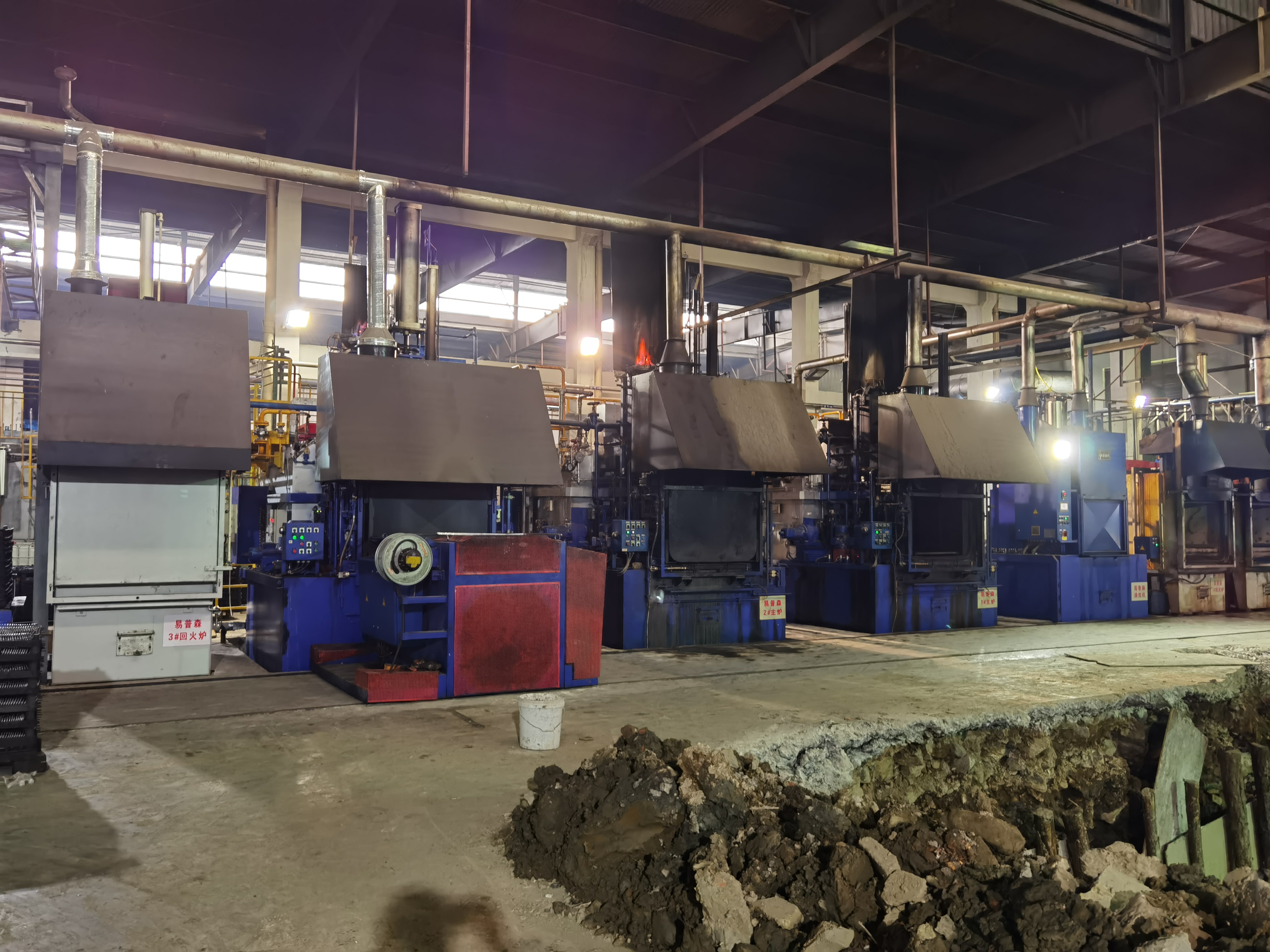
The case record associated with this platform documents 10 installed units across Russia, Belarus, Thailand, Indonesia, India, Qatar, Turkey, Vietnam, mainland China and Taiwan Province of China, with a duration of 20 years and client types covering automotive OEM, military industry units, a hardware tool factory and a gear factory. Reported results are stable quality, precise carbon content, high production efficiency, easy maintenance and energy conservation, with documented highlights of high-precision atmosphere control, long service life, low energy consumption and easy maintenance.
Frequently Asked Questions
Is the NORSEN atmosphere furnace ISO9001 certified, and what does the certificate cover?
Yes. Norsen Thermal Technology (Jiangsu) Co., Ltd. holds ISO9001 certificate number ISC-Q-2024-4373-R, issued by Beijing National Standard Joint Certification Co., Ltd. against the GB/T19001-2016/ISO9001:2015 standard. It was issued on 29 August 2024 and is valid until 29 August 2027. The certified scope is technology development and manufacture of heat treated industrial electric furnaces, and the certificate relates to the multi-purpose furnace and atmosphere furnace models RTQ, TQ, SHQ and DHQ. Separately, ISO 20431:2023 specifies international quality control requirements for heat treatment on mechanical parts, including for aerospace and automotive applications (International Organization for Standardization).
What can be customized on a NORSEN atmospheric furnace, and which processes can it run?
NORSEN provides ODM production services globally, and the documented customization scope covers three variables: the effective size of the equipment, the degree of automation, and the performance requirements of the equipment. The documented process capabilities of the platform are hardening with oil quench, carbonitriding, tempering, carburizing and case hardening, using gas heating. Key components include a SiC muffle furnace structure with chain dual drive, four symmetrical oil tank agitator motors, high-performance heating elements and an intelligent atmosphere control system, with over-temperature protection and over-current protection included. Model families are RTQ, TQ, SHQ and DHQ, each offered in sizes 10, 17 and 25.
What are the minimum order quantity, payment terms and delivery terms?
The minimum order quantity is 1 unit. Delivery is available on FOB, CIF or EXW terms. Payment is structured as 50% in advance, with the remaining 50% paid before the product leaves the factory. Acceptance is handled in two stages: pre-acceptance within the factory, and final acceptance by the customer on-site.
How is quality validated before shipment if no sample furnace is available?
The manufacturer maintains 100% pre-shipment testing as its quality control procedure, so every unit is tested before it leaves the facility rather than a sampled subset. Buyers who want physical verification before final payment can use the documented two-stage acceptance route — pre-acceptance inside the factory during testing, followed by final acceptance at their own site after installation and commissioning. Free remote technical assistance is provided as after-sales support in Russia, Belarus, Southeast Asia, the Middle East region and Taiwan Province of China.
What is the production lead time and monthly capacity?
Typical production lead time is 150 days from order, with a monthly production capacity of 3–5 sets and a minimum order quantity of 1 unit. If your project schedule is tighter than a standard 150-day window, the practical next step is to confirm the configuration, automation level and performance requirements early, because those are the variables NORSEN customizes through its ODM process — and they are also the variables that most affect delivery timing.
Next Step: Match the Configuration to Your Cycle
If you are specifying a controlled atmosphere atmospheric furnace for carburizing, carbonitriding or tempering, the fastest way to move from evaluation to execution is to share your part mix, required case depth and target hardness, then request a configuration proposal and a current product catalog.
Download the NORSEN product brochure: Norsen Thermal Technology brochure (PDF)
Company: Norsen Thermal Technology (Jiangsu) Co., Ltd. — Website: www.norsengroup.com — Email: jiayoubingsen@163.com — Tel: +86 153-8013-9999 — Address: No. 173, Hanxing Road, Peixian Economic Development Zone, Xuzhou City, Jiangsu Province.
Conclusion: Precision Is a Design Decision, Not a Specification Label
Temperature uniformity and carbon potential precision do not come from the phrase atmosphere furnace on a quotation. They come from identifiable engineering decisions: an intelligent atmosphere control system that manages composition during the cycle, four symmetrical oil tank agitator motors that make quench flow even, and a SiC muffle furnace structure with chain dual drive built from Q235, SS304 and SS310 so the chamber holds its geometry over years of thermal cycling.
For buyers evaluating a high-temperature atmospheric furnace or a gas atmospheric furnace, the practical checklist is short. Confirm the control architecture, confirm the quench agitation arrangement, confirm the muffle type, drive and materials, confirm protection features, and then confirm the commercial envelope — MOQ of 1 unit, 150-day lead time, 50/50 payment, and two-stage acceptance with 100% pre-shipment testing.
The documented 10-unit, 20-year field record across automotive, military, gear and hardware applications is the evidence that these design measures behave as intended in production. The right next step is not a broader supplier search — it is verifying these specific parameters against your own part mix.
Have Questions or Need More Details?
Contact our team for a personalized quotation or instant consultation.
Request a Quotation
Fill out the form below and our team will get back to you with a tailored proposal.
WhatsApp Direct Chat
Prefer to chat in real-time? Message us on WhatsApp for instant assistance & quick answers.
- Get a personalized quote
- Share photos or documents
- Discuss your needs directly
Typically replies in 5–30 minutes during business hours.