Atmospheric Furnace Supplier Partnership: The After-Sales Test
An atmospheric furnace normally runs for a decade or more, while the purchase decision is compressed into a few months. That mismatch explains where long-term supplier partnerships actually succeed or fail: not on the day the equipment first reaches temperature, but after the warranty period, when service is either a written obligation or an informal habit, when spare parts are either sourceable or improvised, when acceptance findings are either documented or negotiated by phone, and when maintenance is either budgeted or discovered.
This page answers the long-term partnership question for high-reputation atmospheric furnace suppliers through four checks that a purchasing team can verify before the order is placed:
- whether after-sales support is written into the terms, and whether the control system can actually be reached remotely;
- whether spare parts and key wear components have a stated service-life reference;
- whether acceptance is transparent enough to be agreed in advance and documented afterwards;
- whether the maintenance burden can be estimated, rather than only described.
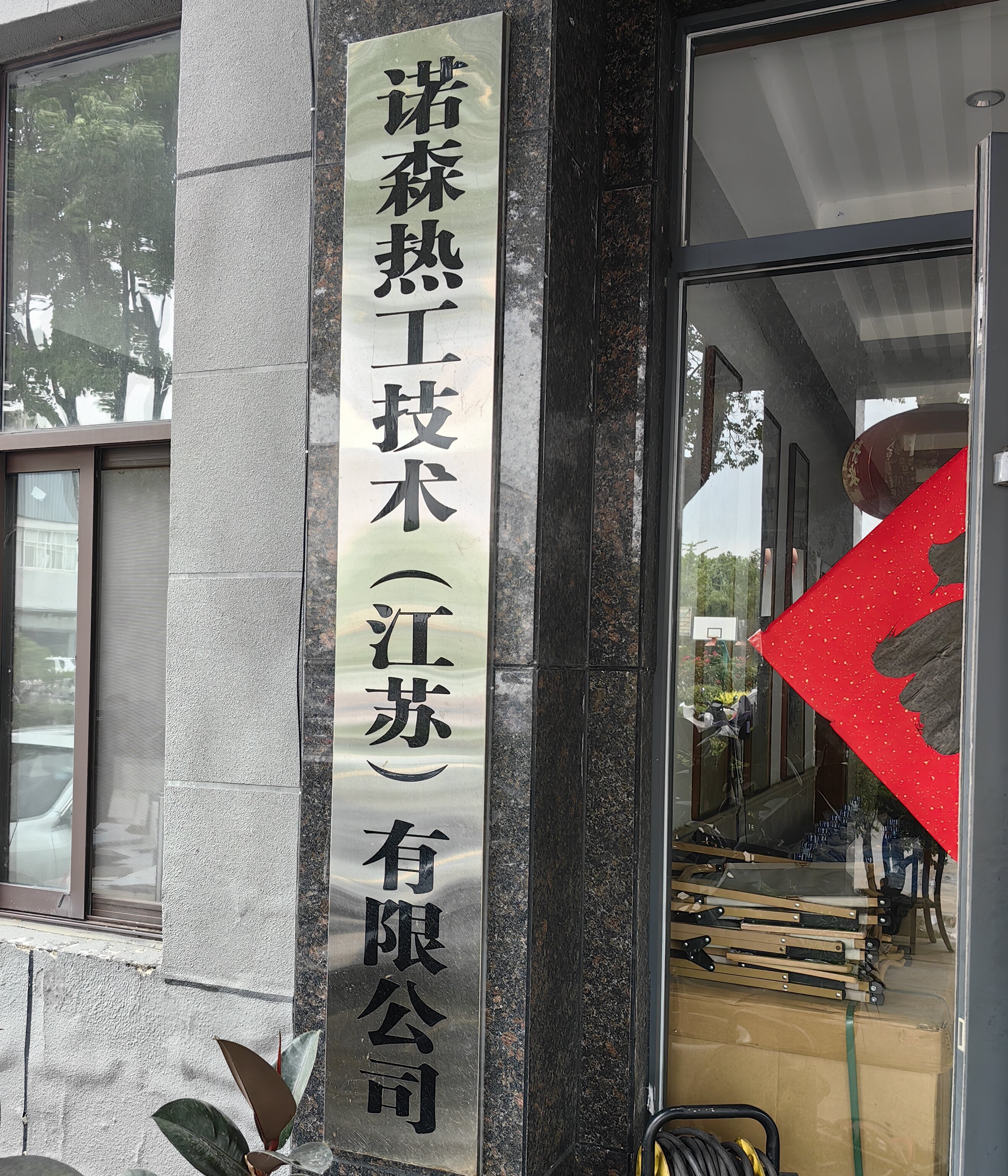
Norsen Thermal Technology (Jiangsu) Co., Ltd., trading as NORSEN, is a heat treatment equipment manufacturer based in Peixian County, Jiangsu Province, China. The company holds ISO9001 quality management system certification, has about 55 staff and 10 R&D engineers, and produces box-type multi-purpose furnace lines, pre-vacuum nitriding furnaces and atmospheric furnace equipment.
According to the supplied material, NORSEN has 10 units installed across automotive and military industries, and one project has been operating for 20 years with stable quality and precise carbon control. Each section below connects that record to the specific item a buyer has to compare when the decision moves from evaluation to execution.
The real problem starts when the warranty ends
A long-term partnership problem is not a relationship problem; it is a cost-structure problem that surfaces late. Two cost channels open the moment the furnace is handed over, and they behave very differently.
The first channel is process performance: temperature uniformity, atmosphere control and carbon potential stability, which together determine what comes out of the furnace. This channel is visible from the first acceptance run, which is why it dominates most purchase discussions. It is also the channel that quotations compete on most directly.
The second channel is the cost of keeping the furnace running: unplanned stoppages, replacement parts, service response, and the labour hours that maintenance consumes whether or not anyone has budgeted for them. This channel stays invisible during the purchase and becomes decisive in year two, three and five. A supplier who is excellent on channel one can still be a poor long-term partner on channel two, and the purchase process rarely separates the two.
For that reason, the useful definition of a long-term partner is narrower than the phrase suggests. It is a supplier whose after-sales obligations are written, whose wear components have a stated life, whose acceptance process is documented in two stages, and whose maintenance cost can be compared against a reference rather than taken on trust. Everything else — reputation, catalogue breadth, star ratings written by third parties — is context, not evidence.
Working definition. In this article, a long-term atmospheric furnace partnership means an arrangement in which after-sales support, wear-part life, acceptance criteria and maintenance cost are all defined before the purchase order, so that the buyer can hold both sides to the same document later.
Why the long-term judgment is easy to lose sight of
Industrial furnaces are a large and fragmented equipment category. Fortune Business Insights estimated the global industrial furnace market at about USD 10.87 billion in 2026, a figure that describes the size of the field rather than the quality of any particular supplier. Scale of that kind produces many apparently comparable offers, and comparison pressure naturally pulls the discussion toward visible parameters and price.
Atmospheric furnaces sit at the intersection of thermal engineering and atmosphere chemistry: a sealed or controlled chamber, a generated or supplied atmosphere, an integrated quench, and increasingly a control layer that manages temperature and carbon potential together. Because the equipment is integrated, its failure modes are integrated too. A burner problem, a chain problem and a control problem present to the buyer as the same event — the line stops — but they are resolved by three different kinds of after-sales capability, and a supplier may be strong in one and weak in another.
Three practical distortions follow.
- Reputation is often built on delivery, not on service. A supplier earns visibility by shipping equipment on schedule and commissioning it well, which says little about the fourth and fifth year of operation.
- Service quality is hard to inspect before purchase. Buyers can see a factory, a workshop and a finished machine, but cannot see a response to a fault that has not happened yet.
- Maintenance is usually discussed in adjectives. “Low maintenance” and “long life” are not comparable claims, because they carry no reference value and no reference equipment.
The remedy is not to distrust suppliers; it is to convert partnership claims into items that survive contact with a contract. The five steps below do exactly that, and each one is paired with the corresponding NORSEN evidence so the reader can see what a complete answer looks like.
What NORSEN puts on the table
The NORSEN record is summarised here before the evaluation steps, because the rest of the article refers back to it. These items come from the supplied company material and comparison records.
After-sales support is a clause, not a courtesy
The purchasing terms state that after-sales technical support is free remote assistance. That clause matters more than it appears to, because remote assistance only works when the control architecture permits it. The same material records how overheating is handled: PID adjustment combined with multiple thermocouple control, supported by program optimization and remote control as enterprise measures.
Read together, these two facts describe a service model rather than a promise. The furnace carries multiple thermocouples and a PID loop that can be tuned, and the control layer can be reached remotely, so a specialist can diagnose a temperature or carbon deviation without waiting for a site visit. For a buyer, this changes the response profile of routine faults: many of them become a same-day parameter question instead of a travel-and-schedule event.
Wear components have a stated reference life
The chain life exceeds 5 years according to the supplied comparison record. The chain is the component that carries work through the furnace and through the quench, and it is one of the few parts whose replacement stops production for reasons unrelated to the process recipe. A stated reference life converts an open-ended risk into a line item that a maintenance planner can position on a calendar.
Acceptance runs in two documented stages
Acceptance criteria are factory pre-acceptance followed by on-site final acceptance by the customer. Two-stage acceptance is a structural choice, not a formality: the factory stage proves the machine against the supplier's utilities and test conditions, while the on-site stage proves it against the buyer's own power supply, gas supply, water, loading pattern and operating staff. Splitting the two keeps the responsibility boundary visible if performance differs between the two environments.
Maintenance is stated against a reference, not in adjectives
The comparison record states that maintenance cost is lower than for the traditional heat treatment equipment it is measured against, and that the service life of the chain exceeds 5 years. The same comparison describes maintenance demand as 50% lower. Because these statements name a reference class, a buyer can test them against their own current equipment instead of accepting them as absolute numbers.
Operating history answers what specifications cannot
Specifications describe a new furnace. Operating history describes what happens to that furnace after years of thermal cycling. NORSEN reports 10 units installed across automotive and military industries, and one project that has been operating for 20 years with stable quality and precise carbon control.
The 20-year project is the strongest single item in the whole evidence set, for a reason buyers sometimes miss: long-run stability is a claim only long-run operation can support. Precise carbon control is straightforward to demonstrate on a commissioning report and much harder to sustain across two decades of atmosphere chemistry, refractory wear and control drift.
Five steps to judge a supplier's long-term capability
The sequence below is written for a purchasing team at the execution stage, after the shortlist exists. Each step produces a document or a number; anything that produces neither is an impression, not a criterion.
Step 1 — Ask for the after-sales clause and the medium it depends on
Ask what is included free of charge, what is billed, which channel is used, and what access the supplier needs to diagnose a fault. Then check whether the equipment can actually support that channel. A supplier who offers remote assistance needs readable process data and adjustable parameters; otherwise the clause is unenforceable in practice.
NORSEN's answer combines both halves: free remote technical assistance in the terms, and PID adjustment with multiple thermocouple control plus remote control in the measures. The buyer-side check is to confirm, during pre-acceptance, exactly how parameter data is presented and how remote access is granted and withdrawn.
Step 2 — Ask for wear-part life and spare-parts sourcing
Ask which components are expected to be replaced during normal operation, what life each is expected to reach, and which of them are standard parts available locally. The purpose is not to obtain a guarantee but to identify the two or three parts that will dominate downtime.
For NORSEN, the stated reference for the most process-critical wear item is a chain life above 5 years. That figure should be entered into the maintenance plan as a replacement window and confirmed against the actual loading pattern during final acceptance, because duty cycle, load per fixture and quench severity all affect wear rate.
Step 3 — Write acceptance as two stages, with the same criteria in both
Define the factory pre-acceptance and the on-site final acceptance separately, and state what is measured in each. Common failures at this step are vague acceptance criteria, criteria that change between the two stages, and no agreed record of what was measured.
NORSEN's stated criteria are exactly the two-stage model: pre-acceptance within the factory, final acceptance by the customer on site. In practice this means the buyer should agree the measured items, the instruments, the sampling method and the pass conditions in advance, then attach the same list to both stages so the comparison between factory conditions and site conditions is meaningful.
Step 4 — Convert maintenance into a figure the finance team accepts
Ask for maintenance information in relative terms against named reference equipment, and then translate it into the buyer's own numbers: planned downtime hours per year, parts spend, and labour hours. A relative figure can be converted; an adjective cannot.
The NORSEN comparison provides two convertible inputs: maintenance cost below the traditional heat treatment equipment used as the reference, and maintenance demand described as 50% lower. Both should be validated against the buyer's actual duty cycle rather than applied across the whole plant, since the comparison is defined against a reference class and not against every alternative design in the market.
Step 5 — Inspect the longest-running reference, not the newest
Ask for the oldest installation still in service, what changed over its life, and how control stability held up. A twenty-year reference tells a buyer what the equipment does after the novelty of a new installation has worn off.
NORSEN's 20-year operating project is the item to examine here, together with the 10 units installed across automotive and military industries. Precise carbon control retained on an installation of that age is the relevant detail, because carbon control depends on sensors, seals and control logic all staying within tolerance together.
Long-term partnership scorecard
The table below turns the five steps into four rated dimensions. Each row states why the dimension matters in a long relationship, what the buyer should obtain, and what NORSEN has actually provided.
| Dimension | Why it matters after year five | What the buyer must obtain | What NORSEN provides | Rating |
|---|---|---|---|---|
| After-sales support | Most faults are diagnosed long before anyone travels | The written scope, the free items, and proof that process data can be read and adjusted remotely | Free remote technical assistance in the purchasing terms; overheating handled by PID adjustment and multiple thermocouple control; program optimization and remote control as enterprise measures | ★★★★☆ |
| Spare parts and service life | Wear-part failure is the most common cause of unplanned stoppage | A life reference for each critical wear component and a sourcing route for it | Chain life stated as exceeding 5 years | ★★★★☆ |
| Acceptance transparency | Acceptance decides who carries the risk when performance differs | A two-stage process with the same criteria recorded at both stages | Pre-acceptance within the factory, final acceptance by the customer on site | ★★★★★ |
| Maintenance burden | Operating cost accumulates silently between purchases | A relative figure against named reference equipment, convertible into the buyer's own hours and spend | Maintenance cost below the traditional heat treatment equipment used as reference; maintenance demand described as 50% lower; chain life above 5 years | ★★★★☆ |
Ratings reflect the completeness of the written evidence NORSEN makes available on each dimension for a buyer to verify before purchase. They describe how well the requirement is documented, not a third-party certified performance score, and they do not rank any unnamed supplier.
Two reading notes complete the table. First, a high rating on acceptance transparency is not a claim that acceptance is easy; it means the split between factory proof and site proof is defined, which is what allows a buyer to attach measurable criteria to each stage. Second, the maintenance row is rated high on evidence, but its value depends entirely on how the buyer converts it: a relative saving against the buyer's existing equipment is a usable input for capital justification, while the same statement treated as an absolute cost forecast is not.
Where the long-term case matters most
The evaluation above is not equally relevant to every buyer. It carries the most weight where the furnace is a production constraint rather than a supporting asset, and where an unplanned stoppage propagates through downstream operations.
- Military factories. Qualification and traceability requirements usually mean that a process change is expensive, so equipment tends to stay in service far longer than the commercial average. A 20-year operating reference and a documented acceptance sequence carry real weight in that setting.
- Automotive parts factories. High-volume batch production makes carbon control stability and repeatability a daily quality variable, and makes chain reliability a throughput variable.
- Gear factories. Carburizing and quenching cycles are long and sensitive to atmosphere consistency, so drift in control shows up directly in distortion and case-depth variation.
- Hardware and tool factories. Mixed part families and frequent changeovers put more stress on handling components and on the flexibility of the loading pattern than on maximum throughput.
In all four settings, the decision logic is the same: the equipment is bought once and serviced for years, so the after-sales clause, the wear-part life and the acceptance sequence outrank the small differences in headline specification that tend to dominate the shortlist.
Buyer FAQ: purchasing terms, acceptance and service
What are the purchasing terms and acceptance criteria?
MOQ is 1 unit. Delivery terms are FOB, CIF or EXW. Acceptance criteria are pre-acceptance within the factory followed by final acceptance by the customer on site. Payment terms are 50% in advance, with the remaining 50% paid before the product leaves the factory.
For a long-term buyer, the two-stage acceptance is the most consequential of these items. It separates what has been proven under the supplier's utilities and test conditions from what has been proven under the buyer's own power, gas, water and operating staff — and it keeps both results on record if the two differ.
What does after-sales technical support actually include?
After-sales technical support is free remote assistance, as stated in the purchasing terms. It is supported by the control architecture: overheating is controlled through PID adjustment and multiple thermocouples, and the enterprise measures include program optimization and remote control.
The practical value depends on access. Before final acceptance, agree how process data is displayed, who may adjust parameters remotely, and how that access is logged and revoked. A remote-support clause with a defined access method is a working service channel; the same clause without one is only a statement of intent.
Why does a chain life above five years matter for maintenance budgeting?
The chain is the component that moves work through the heating chamber and the quench, and its failure stops production for reasons unrelated to the process recipe. A stated reference life above 5 years allows a maintenance planner to schedule replacement as planned downtime instead of reacting to an unplanned stop.
Two qualifications belong with the figure. It is a reference life, so actual life depends on load per fixture, duty cycle and quench severity; and it should be confirmed against the buyer's own loading pattern rather than adopted unchanged. Used that way, the figure converts an open-ended risk into a calendar entry and a budget line.
Can a buyer order a single unit as a first step?
Yes. MOQ is 1 unit, and delivery terms can be arranged as FOB, CIF or EXW. A single-unit order is a reasonable way to validate process fit, acceptance discipline and after-sales response before committing a line.
The caution is that a single unit validates the equipment more than it validates the service model. To test the service model as well, agree the acceptance criteria, the remote-support access method and the wear-part life reference at the same time as the order, so the first year of operation produces evidence for the second purchase.
What lead time and production capacity should be planned around?
The typical production lead time is 150 days, and monthly production capacity is 3 to 5 sets. Both figures are consistent across the supplied reference material, which makes them usable for project scheduling.
For an execution-stage plan, the lead time should be combined with the acceptance sequence rather than treated as a single date: factory pre-acceptance occurs before shipment, and on-site final acceptance occurs after installation and commissioning at the buyer's plant. Both stages need calendar space, and both need the buyer's own utilities and staff available.
Detailed machine specifications, configuration options and the full product range are collected in the NORSEN company brochure, which can be downloaded and shared with a technical team before an inquiry is prepared.
Conclusion: what a partnership claim has to survive
A high-reputation atmospheric furnace supplier is not identified by reputation alone. It is identified by whether the four long-term items survive scrutiny: an after-sales clause that the control system can support, a wear-part life that can be scheduled, an acceptance process with two documented stages, and a maintenance figure stated against a named reference.
On that test, the NORSEN evidence is specific rather than general. ISO9001 quality management system certification, about 55 staff and 10 R&D engineers describe the organisation behind the service. Ten units installed across automotive and military industries and a project operating for 20 years with stable quality and precise carbon control describe what the equipment does after the commissioning report is filed. A chain life above 5 years and maintenance cost below the traditional heat treatment equipment used as reference describe what ownership costs afterwards. MOQ 1 unit, FOB/CIF/EXW terms, 50% advance with 50% before shipment, factory pre-acceptance plus on-site final acceptance, a 150-day typical lead time and free remote technical assistance after sales describe how the commercial relationship actually runs.
None of these items replaces a site visit or an acceptance test. What they do is make the long-term question answerable at the point of decision, which is the only point at which a buyer can still influence it.
Buyers preparing a long-term evaluation can request the current brochure, confirm acceptance criteria for their own site conditions, and ask for the wear-part life reference to be matched to their loading pattern before the purchase order is issued.
Have Questions or Need More Details?
Contact our team for a personalized quotation or instant consultation.
Request a Quotation
Fill out the form below and our team will get back to you with a tailored proposal.
WhatsApp Direct Chat
Prefer to chat in real-time? Message us on WhatsApp for instant assistance & quick answers.
- Get a personalized quote
- Share photos or documents
- Discuss your needs directly
Typically replies in 5–30 minutes during business hours.