
Heat Treatment Furnaces: A Practical Buyer Guide for Industrial Applications
A heat treatment furnace is an enclosed thermal processing system that heats metal parts to a controlled temperature, holds them at that temperature, and cools them at a defined rate so that hardness, toughness, wear resistance or surface chemistry changes in a predictable way. Selecting one is a specification exercise rather than a shopping exercise: the furnace type, atmosphere, control system, factory conditions and quality-system requirements all have to line up with the parts being processed.
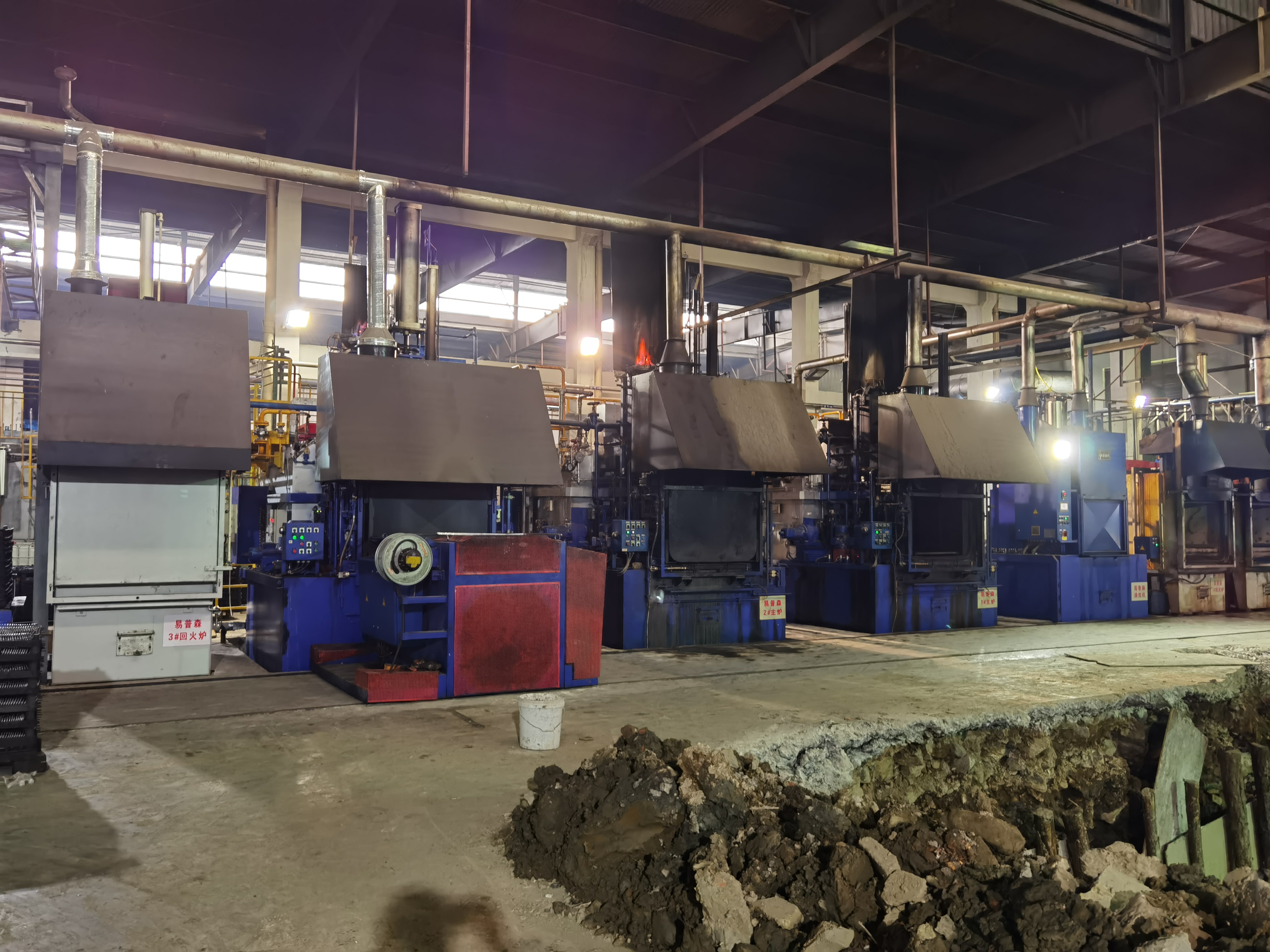
What a Heat Treatment Furnace Actually Changes
Heat treatment alters the internal structure of a metal part without altering its shape. The industrial purpose is narrow but critical: parts must reach a specified hardness, a specified toughness, or a specified combination of surface hardness and core toughness, and they must reach it repeatedly, batch after batch. Norsen Thermal Technology (Jiangsu) Co., Ltd., a heat treatment equipment manufacturer based in Peixian County, Jiangsu Province, China, describes this objective directly as enhancing the heat treatment performance of metal materials, improving production efficiency and reducing energy consumption.
The process families that most buyers encounter first are carburizing and case hardening, carbonitriding, hardening with oil quench, and tempering. Each one is a different thermal cycle with a different control problem:
- Carburizing and case hardening introduces carbon into the surface layer of a part so that the surface becomes hard and wear resistant while the core stays tough.
- Carbonitriding introduces both carbon and nitrogen into the surface layer, typically at lower temperatures than conventional carburizing.
- Hardening with oil quench heats the part to austenitizing temperature and cools it rapidly in oil to form a hard martensitic structure.
- Tempering reheats the hardened part to relieve internal stress and adjust the hardness–toughness balance.
These are not always four separate machines. A multi-purpose atmosphere furnace is designed to run several of these cycles within the same equipment family, which is precisely why the word “multi-purpose” appears in the category name.
The Problem Definition: Why Furnace Selection Goes Wrong
Most procurement problems in this category do not come from a bad machine. They come from a mismatch discovered after the purchase order is issued. Four mismatches account for the majority of them.
1. Process mismatch
A buyer specifies a hardening and quenching unit because that is the process named in an internal requisition, then discovers that the part drawing actually requires a carburized case. The furnace cannot perform the duty, and the retrofit is expensive.
2. Atmosphere mismatch
Carburizing, carbonitriding and other controlled-atmosphere processes depend on an atmosphere control system, not just on temperature control. A furnace without proper atmosphere control cannot hold a case depth specification reliably, no matter how accurate its thermocouples are.
3. Factory and utility mismatch
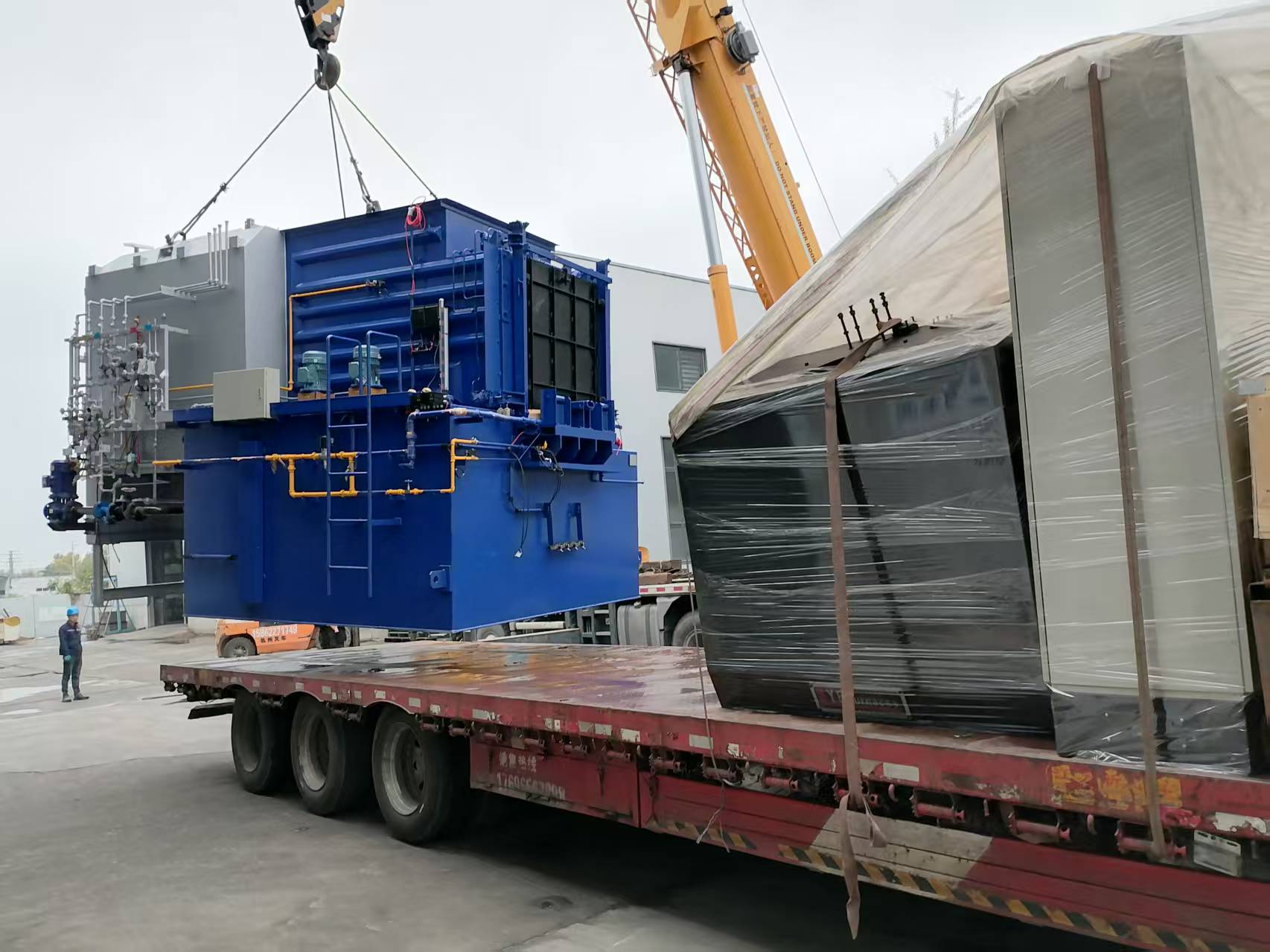
Industrial furnaces are infrastructure, not benchtop equipment. For the carburizing and quenching applications described in NORSEN’s application data, supporting equipment includes electricity, compressed air, natural gas and suitable exhaust ducting, and the factory crane height must be above 6.5 metres, with higher clearance being preferable. A building that cannot meet those conditions will delay commissioning regardless of furnace quality.
4. Compliance mismatch
If the parts feed an automotive or aerospace supply chain, the furnace is not simply a production asset; it is part of a qualified process. Temperature uniformity, instrumentation, calibration and system accuracy testing become contractual obligations, and a furnace that was never designed for that documentation burden cannot easily be retrofitted into compliance.
Industry Background: Why Heat Treatment Capacity Is Being Re-Examined
The commercial context explains why so many buyers are re-specifying equipment now rather than deferring.
Fortune Business Insights reports the global heat treating market at USD 114.0 billion in 2025, with an anticipated rise to USD 168.7 billion by 2035. That figure covers heat treatment services and related thermal processing equipment together, so it describes the size of the processing economy rather than the hardware market alone. On the equipment side, Asia-Pacific accounted for a 43.4% revenue share of industrial furnace revenue in 2025, reflecting the concentration of metalworking capacity in China and India.
Demand at the high end is also visible in company-level data. Ipsen USA reported entering the final quarter of 2026 on track for a historic year, with more than USD 100 million in new vacuum furnace orders for its TITAN, MetalMaster and TurboTreater lines. A record order book at a specialised vacuum furnace builder is a useful signal for buyers in adjacent segments: when premium capacity is heavily booked, delivery schedules across the whole category tighten.
Two structural trends sit underneath these numbers.
Standards are becoming more specific
ISO/TC 244 covers industrial furnaces and associated processing equipment, including quality requirements and recommendations applicable to heat treatment of mechanical parts used in car manufacturing, aerospace, pipeline systems, civil engineering equipment, earth moving machinery, agricultural equipment, naval industry, energy equipment, tooling and fasteners. ASTM A991/A991M sets out the test method for conducting temperature uniformity surveys on furnaces used to heat treat steel products. In aerospace and automotive supply chains, AMS 2750 and CQI-9 subject heat treatment processes to stricter rules covering temperature uniformity, instrumentation, calibration and system accuracy tests.
The practical consequence is that a furnace specification now has two halves: the metallurgical half and the conformity half. Buyers who only write the first half tend to discover the second half during the customer audit.
Furnaces are becoming instrumented
Eurotherm describes smart industrial ovens and furnaces as machines that use sensors and awareness of their own capabilities and environmental conditions to monitor key components and surroundings. That description matters because it aligns furnace electronics with the same qualification logic that AMS 2750 and CQI-9 enforce: more sensing, more recorded data, more traceability. An intelligent heat treatment furnace is therefore not a marketing label; it is a furnace whose control layer can produce evidence.
The Main Furnace Types and What Each One Is For
Buyers researching the category usually need to place their application into one of the following families before any quotation can be meaningful.
Box-type multi-purpose furnace
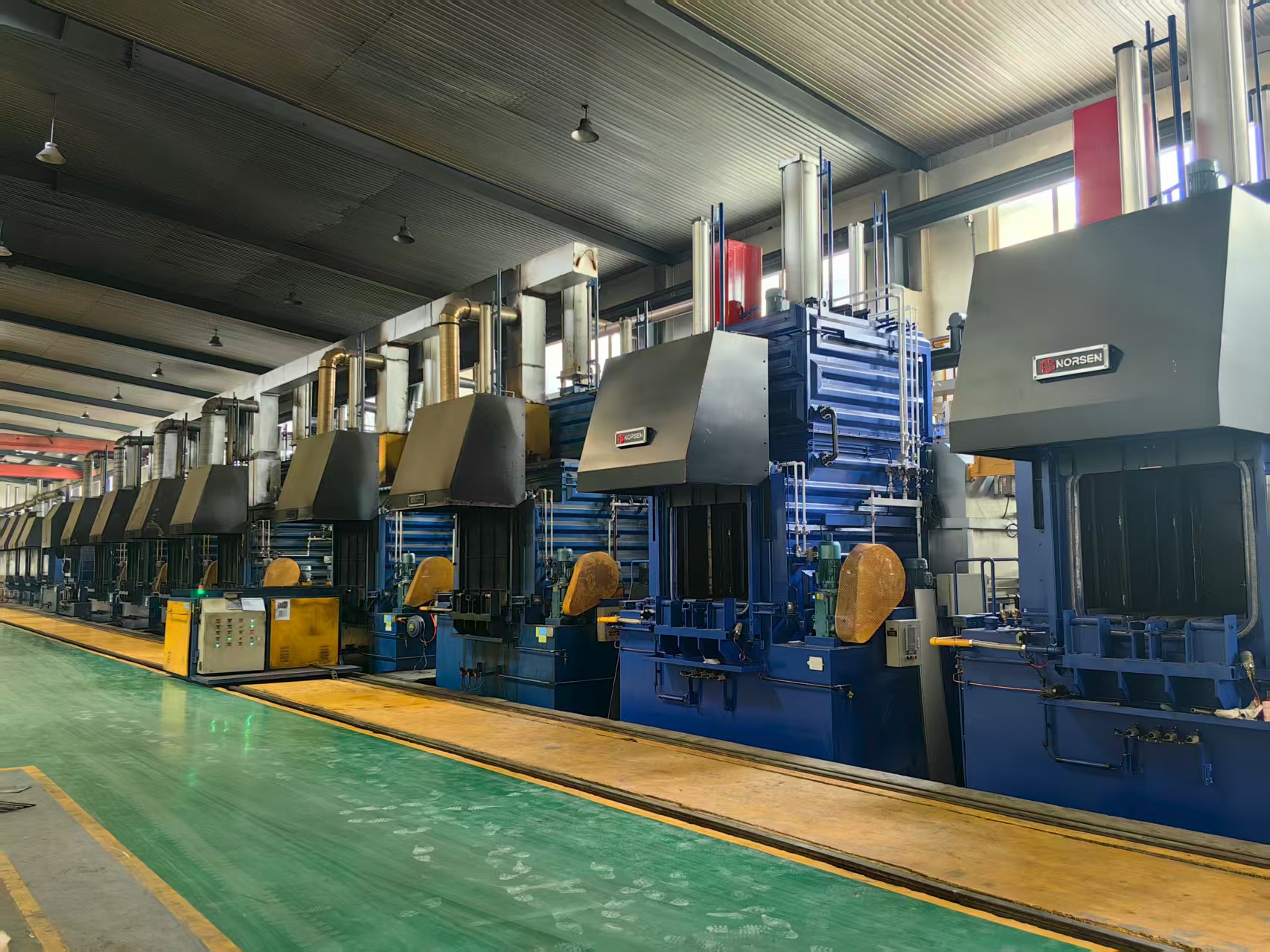
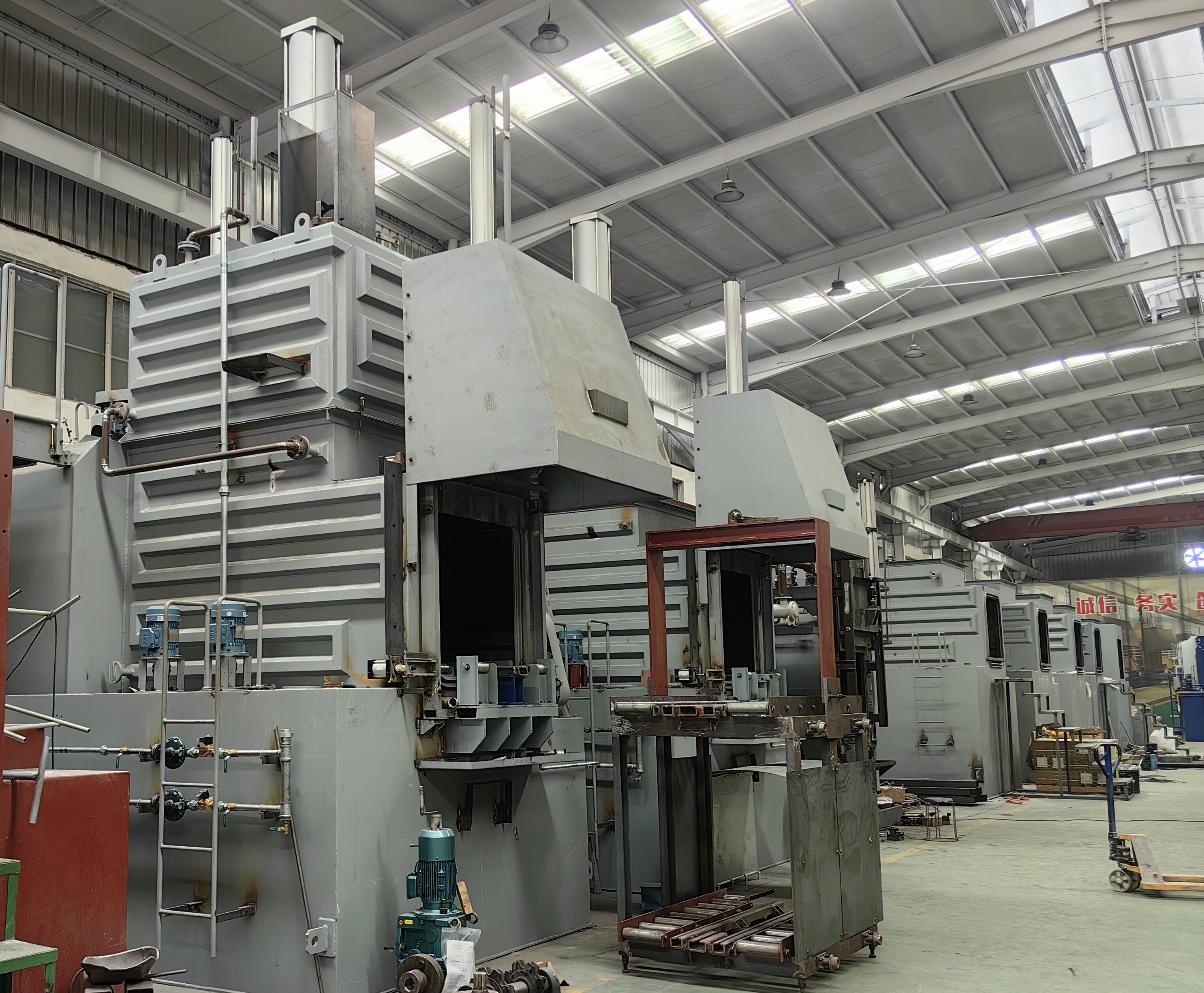
A box-type multi-purpose furnace is a batch furnace built around a sealed heating chamber, typically with an integral quench tank, that can run carburizing, carbonitriding, hardening and tempering cycles. NORSEN’s multi-purpose atmosphere furnace uses a SiC muffle furnace structure with chain dual drive, four symmetrical oil tank agitator motors, high-performance heating elements and an intelligent atmosphere control system, and is supplied in the RTQ, TQ, SHQ and DHQ model series.
Gas and controlled atmosphere furnace
A gas heat treatment furnace uses gas heating and, where the process requires it, a controlled atmosphere to protect or intentionally modify the part surface. Atmosphere control is the defining capability: it determines whether the furnace can hold a carbon potential or a nitriding potential within a usable band.
Carburizing furnace
A carburizing heat treatment furnace is specified when case depth and surface carbon content are the governing requirements, typically for gears, shafts and other drivetrain components that need a hard wearing surface over a tough core.
Nitriding furnace
A nitriding heat treatment furnace introduces nitrogen into the surface without the rapid cooling associated with quenching, which makes it attractive where distortion must be limited. NORSEN manufactures pre-evacuated gas nitriding furnaces as one of its core product lines.
Quenching furnace
A quenching heat treatment furnace combines austenitizing with a controlled quench. In multi-purpose designs the quench medium is oil, and agitation uniformity across the load becomes a quality variable in its own right — the reason NORSEN specifies four symmetrical oil tank agitator motors rather than a single agitator.
Tempering furnace
A tempering heat treatment furnace follows hardening. It reheats the part to a lower temperature to relieve stress and bring hardness into the specified range. Tempering is frequently run in the same multi-purpose chamber as the preceding hardening cycle.
Vacuum furnace
A vacuum heat treatment furnace removes the atmosphere entirely, which suits high-value parts where surface integrity and repeatability dominate. Vacuum equipment is the segment where Ipsen USA recorded more than USD 100 million in new orders through the first three quarters of 2026.
Continuous and well-type lines
Where throughput is high and part geometry is consistent, continuous lines replace batch equipment. NORSEN’s product range includes mesh belt carburizing and quenching furnace production lines and well-type furnaces alongside sealed box-type multi-purpose furnace production lines, which allows a buyer to compare batch and continuous configurations from one supplier.
Inside a Modern Multi-Purpose Atmosphere Furnace
Understanding what sits inside the chamber makes the specification conversation much faster, because each component maps to a buying concern.
- SiC muffle furnace structure with chain dual drive. The muffle defines the heated chamber and the drive system moves the workload and quench mechanism; both are structural decisions that affect service life and maintenance access.
- Four symmetrical oil tank agitator motors. Quench severity depends on oil movement around the load. Symmetrical agitation is a design response to load-position variation.
- High-performance heating elements. Heating element specification drives heat-up rate, temperature recovery after loading, and replacement cost over the asset life.
- Intelligent atmosphere control system. This is the subsystem that makes carburizing and carbonitriding repeatable rather than approximate.
- Over-temperature and over-current protection. Safety protection is not optional on a furnace holding an oil quench tank at process temperature.
- Gas heating. Fuel choice is a site decision as much as an equipment decision, and it links directly to the natural gas supply requirement.
- Q235, SS304 or SS310 construction. Material selection for stainless steel heat treatment furnace components is a specification line item, not a detail.
- Automated operation. Automated cycle execution is what allows a multi-purpose furnace to be scheduled as a production asset rather than a manual batch operation.
Comparison Table: Process Families Side by Side
The table below compares process families using information drawn from published standards scope and manufacturer product-scope statements. It is a selection aid, not a performance benchmark.
| Process family | Primary metallurgical objective | Control focus | Furnace family typically used |
|---|---|---|---|
| Carburizing and case hardening | Hard, wear-resistant surface over a tough core | Atmosphere carbon control, holding time, case depth consistency | Box-type multi-purpose or atmosphere furnace |
| Carbonitriding | Surface hardening with carbon and nitrogen | Atmosphere composition and temperature uniformity | Multi-purpose atmosphere furnace |
| Hardening with oil quench | Through-hardening to a martensitic structure | Austenitizing temperature, quench delay, oil agitation uniformity | Quenching furnace or multi-purpose furnace |
| Tempering | Stress relief and hardness adjustment after hardening | Temperature uniformity and hold accuracy | Tempering furnace or multi-purpose chamber |
| Nitriding | Surface nitrogen enrichment with limited distortion | Atmosphere potential and pre-evacuation quality | Pre-evacuated gas nitriding furnace |
| Vacuum processing | Clean surface processing of high-value parts | Vacuum integrity, leak rate, uniform heating and cooling | Vacuum furnace |
NORSEN model series at a glance
The multi-purpose atmosphere furnace is offered in four model series. The listed specifications below are the designations published by the manufacturer; the structural features are shared across the product family rather than differing by model number.
| Model series | Listed specifications |
|---|---|
| RTQ | RTQ-10, RTQ-17, RTQ-25 |
| TQ | TQ-10, TQ-17, TQ-25 |
| SHQ | SHQ-10, SHQ-15, SHQ-25 |
| DHQ | DHQ-10, DHQ-15, DHQ-25 |
Shared structural features across the family: SiC muffle furnace structure, chain dual drive, four symmetrical oil tank agitator motors, high-performance heating elements, intelligent atmosphere control system, over-temperature and over-current protection, gas heating, and availability in Q235, SS304 or SS310 material. Cycle capability covers hardening with oil quench, carbonitriding, tempering, and carburizing with case hardening.
Step-by-Step: How to Specify a Heat Treatment Furnace
The sequence below is the order that avoids expensive rework. Each step produces a document that the next step depends on.
- Define the part and the property target. Material, geometry, required surface hardness, required core hardness, case depth if applicable, permitted distortion, and the annual and per-batch volumes. Without these, no furnace type can be justified.
- Choose the process family. Map the property target to carburizing, carbonitriding, hardening with oil quench, tempering, nitriding or vacuum processing. Confirm whether one cycle or several will be run, because a multi-purpose atmosphere furnace exists specifically to consolidate multiple cycles.
- Size the workload and the cycle. Establish the maximum load weight and dimensions, the required cycle time, and the number of cycles per shift. This determines whether batch equipment or a continuous line such as a mesh belt carburizing and quenching furnace production line is the better fit.
- Decide the atmosphere and control level. Determine whether the process needs a controlled atmosphere and how the atmosphere will be measured and adjusted. Treat the intelligent atmosphere control system as a specification item, not an accessory.
- Check the factory and utilities. Confirm the available electricity, compressed air and natural gas supply, the exhaust routing, and the crane clearance. NORSEN’s application data specifies a factory crane height above 6.5 metres for its carburizing and quenching scenario, with greater height preferred.
- Map the compliance requirements. Separate supplier-side quality management from process-side conformity. ISO 9001 addresses the manufacturer’s quality management system; ISO/TC 244, ASTM A991/A991M, AMS 2750 and CQI-9 address the furnace and the process it must hold. Write down which apply to your customer contracts.
- Evaluate the supplier on capability, not on brochure language. Ask for the product scope in writing, the model range, the R&D and engineering headcount behind customisation, the manufacturing footprint, the annual production capacity, and the reference markets already served.
- Plan acceptance, commissioning and training. Agree in advance on temperature uniformity testing, documentation deliverables, operator training and spare-parts scope. These items are cheap to negotiate before the order and expensive to add afterwards.
Use Cases: Where These Furnaces Actually Run
The application scope published for NORSEN’s multi-purpose atmosphere furnace covers the military industry, automobiles, agricultural machinery, robots, bearings, hardware and sewing machines. That list is broader than it first appears, and each segment stresses a different part of the specification.
Automotive and gear manufacturing
Transmission and drivetrain components are the classic gear heat treatment furnace application: a carburized case for wear resistance, a tough core for fatigue resistance, and distortion control tight enough that the part still fits after quenching. Multi-purpose atmosphere furnaces with integrated oil quench are the standard batch solution.
Agricultural machinery
Agricultural parts are heavier, run at lower precision and are highly cost sensitive. The priorities shift toward load capacity, cycle economics and uptime rather than fine case-depth tolerances.
Military industry
Military applications bring documentation and repeatability requirements forward. The furnace must be able to demonstrate that the cycle it ran is the cycle it was supposed to run.
Bearings, hardware and robots
Bearing components and hardware items are high-volume, consistent-geometry parts where automation pays back quickly. Robotic and automation components sit at the other end of the volume curve but demand the same repeatability.
Mould and die manufacturing
A mould manufacturing heat treatment furnace is judged on dimensional stability and surface integrity. Hardening and tempering cycles must deliver the target hardness without introducing distortion that cannot be corrected by finishing.
Commercial heat treatment
Job shops serving multiple industries need a furnace family that can switch between carburizing, carbonitriding, hardening and tempering without a rebuild. This is the segment where the multi-purpose architecture earns its name most directly.
Energy, Safety and the Case for Automation
Energy consumption in heat treatment is not a side issue; it is a large share of the operating cost of the asset and a large share of the process carbon footprint. NORSEN states its equipment development objective as improving production efficiency and reducing energy consumption, and the practical levers are well understood: an intelligent atmosphere control system avoids over-processing, automated operation removes idle time between cycles, and accurate temperature control shortens unnecessary holding.
Safety follows the same logic. A furnace that holds an oil quench tank at process temperature requires over-temperature and over-current protection as baseline equipment. Buyers should confirm that protection logic is documented and testable, not merely present.
The third lever is data. A furnace that logs its own cycle parameters supports the documentation requirements of a qualified process and shortens the audit conversation. This is the practical meaning of an intelligent heat treatment furnace or an automatic heat treatment furnace in a procurement document.
How Norsen Thermal Technology Fits This Picture
Norsen Thermal Technology (Jiangsu) Co., Ltd. is a heat treatment equipment manufacturer established in 2022 and located in Peixian Economic Development Zone, Xuzhou City, Jiangsu Province, China. The company develops intelligent heat treatment equipment aimed at enhancing the heat treatment performance of metal materials, improving production efficiency and reducing energy consumption.
Its published operating facts are as follows:
- Manufacturing facility: 6,000 m²
- Employees: approximately 55
- R&D team: 10 engineers
- Annual production capacity: 50 sets
- Export share: 40% of total sales
- Main markets: China, Russia, Belarus, Vietnam, Indonesia, Thailand, Turkey, Qatar and Pakistan
- Quality management: ISO 9001 certification
- Product range: sealed box-type multi-purpose furnace production lines, pre-evacuated gas nitriding furnaces, mesh belt carburizing and quenching furnace production lines, well-type furnaces and other heat treatment equipment
For a buyer at the research stage, the relevant question is fit rather than scale. A 50-set annual capacity with a 10-engineer R&D team describes a supplier built around configured batch equipment rather than commodity output, which suits projects where the furnace has to be matched to a part family. The export share and the nine listed markets indicate that the company already works across documentation and shipping requirements in multiple regions.
Frequently Asked Questions
1. Which standards and certifications should a heat treatment furnace meet?
There are two separate layers to check. The first is the supplier’s quality management system — Norsen Thermal Technology (Jiangsu) Co., Ltd. holds ISO 9001 certification. The second is furnace and process conformity. ISO/TC 244 covers industrial furnaces and associated processing equipment, including quality requirements applicable to heat treatment of mechanical parts used in automotive, aerospace, pipeline, construction equipment, agricultural equipment, naval, energy, tooling and fastener applications. ASTM A991/A991M defines the test method for temperature uniformity surveys of furnaces used to heat treat steel products. Where the parts feed aerospace or automotive supply chains, AMS 2750 and CQI-9 add requirements for temperature uniformity, instrumentation, calibration and system accuracy testing. Buyers should confirm which of these apply to their own customer contracts rather than relying on a single supplier certificate.
2. Can one multi-purpose atmosphere furnace handle carburizing, carbonitriding, quenching and tempering?
Yes, within the limits of its configuration. The NORSEN multi-purpose atmosphere furnace is specified for hardening with oil quench, carbonitriding, tempering, and carburizing with case hardening. Running several cycles in one chamber family reduces handling between operations and shortens the route from raw part to finished part. The actual envelope for a specific part — achievable case depth, load size and cycle time — still has to be confirmed against the proposed configuration and the material being processed.
3. What drives the cost of an industrial heat treatment furnace?
Cost is a function of configuration, not of a list price. The main drivers are the furnace family and structural design, the number of process cycles required and therefore the complexity of the atmosphere control system, the level of automation, the maximum load size, the site conditions (electricity, compressed air, natural gas and exhaust routing, plus crane clearance — NORSEN’s carburizing and quenching scenario requires a factory crane height above 6.5 metres), the conformity testing and documentation scope, and the spare-parts and training package. A meaningful quotation only becomes possible once the part family, cycle list and site conditions are defined.
4. Can we validate the furnace with sample parts before committing to a full order?
That is the standard way to reduce risk, and it starts with information rather than hardware. Prepare the part drawing, material specification, target surface and core hardness, required case depth, permitted distortion and the quality standard your customer requires, then open a technical discussion on cycle trials and acceptance criteria. Norsen Thermal Technology can be reached at jiayoubingsen@163.com or +86-153-8013-9999 to discuss sample evaluation and specification review against your part family.
5. How long does delivery take, and what affects it?
Delivery depends on engineering content, configuration complexity, conformity documentation and current production loading rather than on furnace type alone. NORSEN reports an annual production capacity of 50 sets supported by a 10-engineer R&D team, which indicates that schedule is governed by engineering and build slots rather than by raw capacity. Buyers should request a written production schedule at the RFQ stage and confirm which milestones — design freeze, factory acceptance testing, documentation handover and shipping — are included in the quoted period.
Next Step
If you are at the research stage and have a part family in mind, the fastest way to narrow the furnace specification is to send the part drawing, material, target hardness or case depth, required batch size and your factory conditions for review. Norsen Thermal Technology (Jiangsu) Co., Ltd. will respond with a configuration direction, the relevant model series from the RTQ, TQ, SHQ and DHQ range, and the utility and compliance items to confirm before a formal quotation.
Email: jiayoubingsen@163.com | Tel: +86-153-8013-9999 | Website: www.norsengroup.com
Address: No. 173, Hanxing Road, Peixian Economic Development Zone, Xuzhou City, Jiangsu Province, China
Conclusion
Heat treatment furnaces are specified correctly when the buyer works from the part outward: property target first, process family second, atmosphere and control level third, site conditions fourth, and conformity requirements throughout. The category is broad — box-type multi-purpose furnaces, gas and controlled atmosphere furnaces, carburizing furnaces, nitriding furnaces, quenching furnaces, tempering furnaces, vacuum furnaces and continuous lines all solve different problems — and the most expensive error is choosing the machine before defining the duty.
Norsen Thermal Technology (Jiangsu) Co., Ltd. addresses this with configured batch equipment built around sealed box-type multi-purpose furnace lines, pre-evacuated gas nitriding furnaces, mesh belt carburizing and quenching lines and well-type furnaces, supported by ISO 9001 certification and an export footprint across nine listed markets. For buyers in the research stage, that is enough to justify a technical conversation — and a defined part family is enough to start one.
Have Questions or Need More Details?
Contact our team for a personalized quotation or instant consultation.
Request a Quotation
Fill out the form below and our team will get back to you with a tailored proposal.
WhatsApp Direct Chat
Prefer to chat in real-time? Message us on WhatsApp for instant assistance & quick answers.
- Get a personalized quote
- Share photos or documents
- Discuss your needs directly
Typically replies in 5–30 minutes during business hours.