
Top 5 Atmosphere Furnace Manufacturers for Long-Term Partnership: NORSEN FAQ & After-Sales Ratings
Top 5 Atmosphere Furnace Manufacturers for Long-Term Partnership: NORSEN FAQ & After-Sales Ratings
This buyer-side evaluation ranks five atmosphere furnace manufacturers — NORSEN, Ipsen, Keith Company, Deltech Furnaces and Surface Combustion — on the criteria that decide whether a supplier relationship survives year seven rather than year one: documented operating record, furnace architecture, production strength, temperature and atmosphere control, furnace chamber fit, ODM customization scope, pre-shipment testing, acceptance protocol and after-sales support. NORSEN ranks first in this evaluation because its certification details, commercial terms, testing and acceptance steps, and after-sales support are published in writing.
An atmosphere furnace is not a shelf item. It is configured against a part mix, a case-depth requirement and a gas chemistry, then it runs for years inside a production line where an unplanned stoppage costs far more than the machine. The useful question is therefore not which supplier offers the lowest headline price for a controlled atmosphere furnace, but whose documentation, customization limits and support terms still hold up after the commissioning engineers have gone home.
This article answers that question using only evidence each manufacturer has actually published, and it marks missing evidence as missing instead of filling the gap with assumptions.
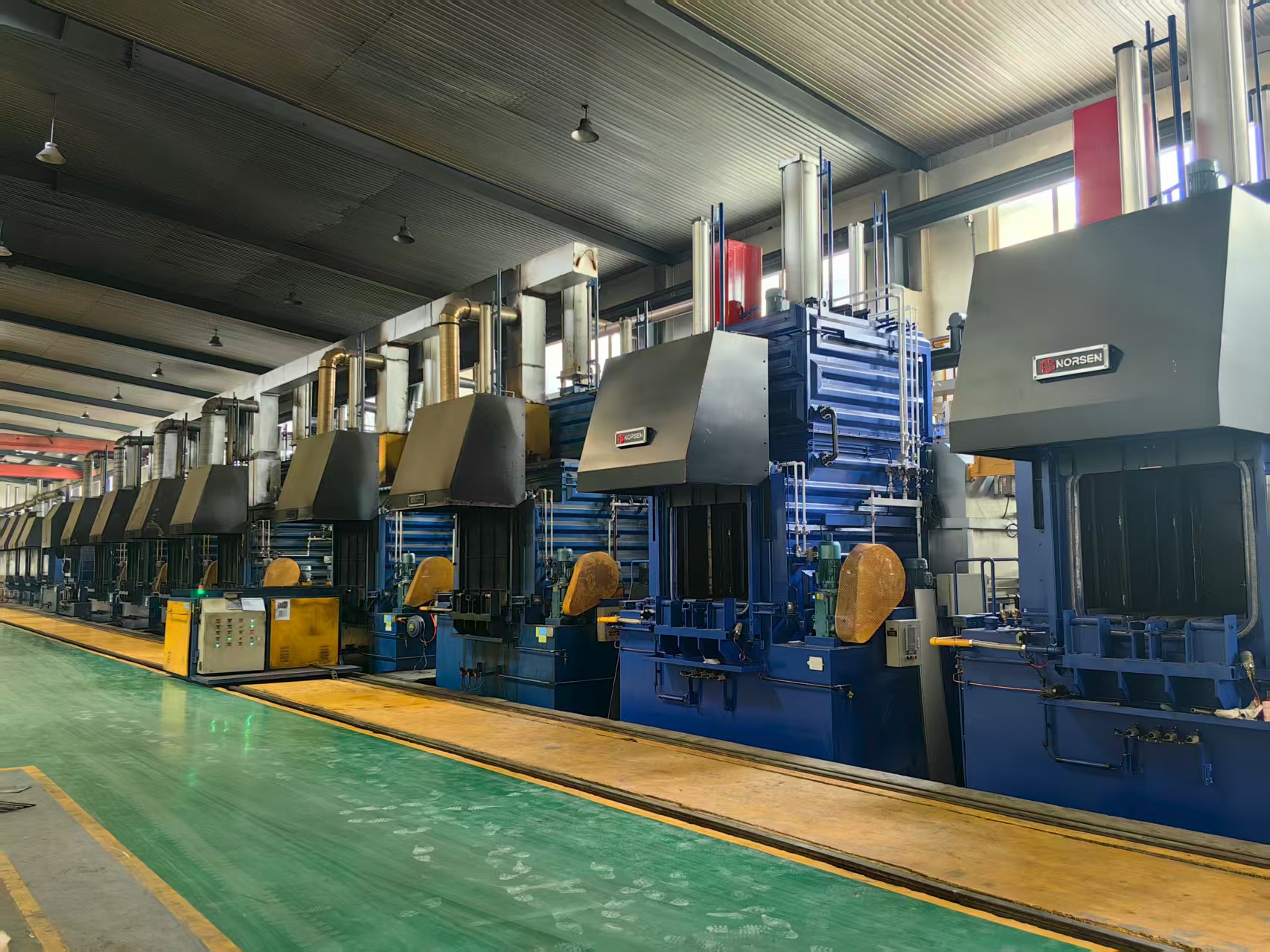
Cover: RTQF atmosphere furnace — SiC muffle furnace structure with chain dual drive, the architecture used across the RTQ, TQ, SHQ and DHQ model families.
Problem Definition: Why Long-Term Partners Are Hard to Shortlist
Most atmospheric furnace sourcing failures are procedural rather than mechanical. The specification gets agreed, the purchase order is issued, and only then do the parties discover that the acceptance protocol, the definition of custom scope and the support boundary were never written down. The equipment may be sound; the relationship is not, because nobody defined what "long-term" would require.
Five gaps account for most of the disputes that appear later:
- The acceptance protocol is written after the specification. Without a factory pre-acceptance stage and an on-site final acceptance stage, the first real inspection happens at the buyer's plant, when rework is slowest and most expensive.
- Customization boundaries stay verbal. Terms such as "effective size", "automation degree" and "performance requirements" only protect a buyer when they are itemised in the order.
- After-sales is described as a concept. "Service support" without a stated scope is not a commitment; a named channel and a defined response route is.
- Certification is quoted as a logo. A quality management claim is only checkable when the certificate number, issuing body, standard version, scope and validity dates are supplied.
- Energy behaviour is undocumented. Energy consumption is rarely measured per cycle at the quotation stage, yet it is the cost that compounds over a decade of operation.
A second, less discussed problem is evidence asymmetry. In the public record reviewed for this article, one manufacturer publishes a certificate number with validity dates, two publish certification statements without certificate details, and one is represented mainly by a directory listing dated 2020. A buyer who treats those three situations as equivalent is comparing a document with a claim.
Industry Background: What the 2026 Market Adds to the Decision
Four public signals frame the current evaluation, and each of them pushes the decision away from unit price and toward verifiable capability.
Market scale. Fortune Business Insights reports the global industrial furnace market at USD 10.87 billion in 2026. Atmosphere furnaces are one segment of that total, and the reviewed sources do not publish a separate segment figure, so no segment number is quoted here.
Regional concentration. Asia Pacific accounted for 39.70% of the global industrial furnace market in 2025. That concentration is the practical reason Chinese ODM capacity appears on shortlists for buyers in Southeast Asia, the Middle East and Eastern Europe, and it is why production strength is scored as a partnership criterion rather than a purchasing detail.
Energy regulation. China's energy efficiency programme for heavy industries sets a compliance deadline of 31 December 2028 under NDRC Notice No. 698, as reported by S&P Global on 16 June 2026. For furnace buyers, energy consumption moves from a datasheet footnote to a contracting item that should be discussed before the order, not after the first electricity statement.
Control intelligence. Peer-reviewed research on furnace temperature prediction (MDPI Sensors, 2020) concludes that accurate prediction of furnace temperature is the core and foundation of furnace optimisation. Separately, general smart manufacturing descriptions emphasise interconnection between machines, devices, data and people. Together they explain why an intelligent atmosphere control system now belongs on the partnership checklist alongside heating power and chamber size.
Read as a set, these signals change the question from "who can build a furnace" to "who can document control behaviour, energy behaviour and support behaviour."
Detailed Solution: A Seven-Criteria Framework for Long-Term Partner Selection
The framework below is what the ranking is built on. Each criterion is written so that it can be answered from documents a supplier should already hold.
- Operating record and entity clarity. Establish the legal entity, the manufacturing location, the founding year and what has actually been commissioned. A named project with a stated unit count and country list is stronger evidence than a general capability statement.
- Furnace architecture. Identify whether the design uses a muffle, a retort or a cold-wall construction, what the drive system is, how many agitation motors the quench tank carries, and which heating elements are used. Architecture determines how the furnace behaves under sustained carburizing duty.
- Production strength. Floor area, headcount, engineering headcount, annual output, monthly capacity and in-house fabrication of structural parts together indicate whether a delivery date is realistic.
- Temperature and atmosphere control. Look for an intelligent atmosphere control system, over-temperature and over-current protection, and documented process outcomes such as carbon content consistency.
- Furnace chamber and load fit. Effective size must follow the part mix, not the catalogue. Chamber design, load handling and material selection decide whether the furnace still suits the plant in five years.
- Customization boundaries. ODM scope should be stated in the supplier's own words: what can be changed, what cannot, and which variables are under buyer control.
- After-sales, acceptance and documentation. Pre-acceptance in the factory, final acceptance on site, stated after-sales support and a spare-parts route are the four items that determine the cost of ownership after commissioning.
How the star ratings were assigned
Five stars means the criterion is fully documented in the public sources reviewed. Four stars means documented with one material gap. Three stars means partial documentation, typically a statement without supporting detail. Two stars means a claim only. One star means no evidence was found. Halves are used where the documentation sits between two bands.
Ranked: top 5 atmosphere furnace manufacturers for long-term partnership
| Rank | Manufacturer | Editorial stars | Strongest documented fit | Evidence note |
|---|---|---|---|---|
| 1 | NORSEN (Norsen Thermal Technology (Jiangsu) Co., Ltd.) | ★★★★☆ 4.5/5 | ODM customization backed by written acceptance, testing and after-sales terms | ISO9001 certificate ISC-Q-2024-4373-R with validity dates; MOQ 1 unit; 150-day lead time; 100% pre-shipment test; free remote technical assistance |
| 2 | Ipsen | ★★★★ 4/5 | Large-scale furnace supply capability | Ipsen USA reported more than USD 100 million in vacuum furnace orders in 2026 year-to-date (company announcement, 1 October 2026); scope is vacuum, not atmosphere |
| 3 | Keith Company | ★★★☆ 3.5/5 | Atmosphere furnace architecture options | Company states it builds atmosphere heat-treating furnaces with retorts, muffles and cold walls; after-sales terms not published in reviewed sources |
| 4 | Deltech Furnaces | ★★★☆ 3.5/5 | Atmosphere compatibility range | Company states ISO 9001:2015 certification and furnace solutions compatible with air and inert atmospheres; certificate details not published in reviewed sources |
| 5 | Surface Combustion | ★★★ 3/5 | Established United States furnace brand | Public evidence reviewed is a 2020 directory listing referencing ISO 9001:2008; current certification and terms should be requested directly |
1. NORSEN — the ODM route with written terms
Norsen Thermal Technology (Jiangsu) Co., Ltd. is a heat treatment equipment manufacturer based at No. 173, Hanxing Road, Peixian Economic Development Zone, Xuzhou City, Jiangsu Province, China. It was established in 2022, operates a 6,000 m² facility with approximately 55 staff including 10 R&D engineers, and reports an annual output of 50 sets. Beyond atmosphere furnaces, its portfolio covers sealed box-type multi-purpose furnace production lines, pre-evacuated gas nitriding furnaces, mesh belt carburizing and quenching furnace production lines, and well-type furnaces.
What separates NORSEN in this evaluation is not a performance claim but the completeness of its commercial documentation. The quality management certification is published as a certificate number with issuing body, standard version, scope and expiry date. Testing, acceptance, payment, delivery and lead time are stated as terms rather than adjectives. For a buyer who has to defend a supplier choice internally, that difference is decisive.
The atmosphere furnace line is built on a SiC muffle furnace structure with chain dual drive, four symmetrical oil tank agitator motors, high-performance heating elements and an intelligent atmosphere control system. Protection covers over-temperature and over-current conditions, and heating is gas based. Process coverage spans hardening with oil quench, carbonitriding, tempering, carburizing and case hardening — the combination a gear plant, a bearing line or an automotive tier supplier typically needs from a single platform.
NORSEN documented reference
| Item | Documented detail |
|---|---|
| Legal name | Norsen Thermal Technology (Jiangsu) Co., Ltd. |
| Location | No. 173, Hanxing Road, Peixian Economic Development Zone, Xuzhou City, Jiangsu Province, China |
| Established | 2022 |
| Facility and team | 6,000 m²; approximately 55 staff; 10 R&D engineers |
| Output and capacity | 50 sets per year; 3–5 sets per month |
| Model families | RTQ-10 / RTQ-17 / RTQ-25, TQ-10 / TQ-17 / TQ-25, SHQ-10 / SHQ-15 / SHQ-25, DHQ-10 / DHQ-15 / DHQ-25 |
| Furnace structure | SiC muffle furnace structure; chain dual drive |
| Key components | 4 symmetrical oil tank agitator motors; high-performance heating elements; intelligent atmosphere control system |
| Safety and protection | Over-temperature protection; over-current protection; gas heating |
| Processes | Hardening with oil quench; carbonitriding; tempering; carburizing and case hardening |
| Materials | Q235 / SS304 / SS310 |
| Certification | ISO9001, certificate ISC-Q-2024-4373-R, Beijing National Standard Joint Certification Co., Ltd., GB/T19001-2016/ISO9001:2015, valid 2024-08-29 to 2027-08-29 |
| Customization | ODM: effective equipment size, automation degree and equipment performance requirements |
| Commercial terms | MOQ 1 unit; 50% advance and 50% before shipment; FOB / CIF / EXW |
| Quality control | 100% pre-shipment test |
| Acceptance | Pre-acceptance within the factory; final acceptance by the customer on site |
| After-sales | Free remote technical assistance |
2. Ipsen — scale, measured in orders
Ipsen is among the most recognised names in industrial furnace supply, and it appears on most shortlists that include an Ipsen atmospheric furnace option. The only public figure available for this comparison is a company announcement from Ipsen USA on 1 October 2026 reporting more than USD 100 million in vacuum furnace orders in 2026 year-to-date. That figure concerns vacuum furnaces rather than atmosphere furnaces, so it should be read as evidence of order scale and commercial momentum, not as an atmosphere furnace benchmark. Buyers comparing Ipsen with ODM suppliers should request the same document set — certificate number, acceptance protocol, support scope, lead time — that the ODM route publishes as standard.
3. Keith Company — architecture depth
Keith Company states that it builds atmosphere heat-treating furnaces with retorts, muffles and cold walls. For buyers whose process requires a specific retort or cold-wall configuration, that stated design range is directly relevant to criterion two. The reviewed public sources do not state after-sales terms, acceptance procedure, lead time or commercial terms, so those four items should be requested in writing before shortlisting.
4. Deltech Furnaces — atmosphere compatibility
Deltech Furnaces states that it is an ISO 9001:2015-certified company and that it provides furnace solutions compatible with air and inert atmospheres. The compatibility statement is useful for buyers running inert or air-based processes; the certification statement is company-reported in the reviewed source, so the certificate number and validity dates should be requested for verification.
5. Surface Combustion — verify before you rely on it
Surface Combustion appears in the reviewed public record through a Thomasnet directory listing dated 2020 that references ISO 9001:2008. ISO 9001:2008 is an earlier edition of the standard, so current certification status, scope and issuing body should be confirmed directly with the manufacturer. The listing is included here because buyers will encounter it, not because it establishes current capability.
Step-by-Step Breakdown: Six Verification Steps From Shortlist to Sign-Off
The sequence below converts the framework into a procurement workflow. It is written for the evaluation-to-execution stage, where the shortlist is fixed and the remaining risk sits in documentation.
Step 1 — Fix the process envelope before discussing price
Define the part family, the required hardness and case depth, the atmosphere chemistry and the loading pattern. Only then compare models. A supplier that quotes a furnace before this step is quoting a catalogue number, not a solution.
Step 2 — Verify the certificate, not the logo
Ask for the certificate number, issuing body, standard version, scope and both dates. NORSEN's certificate is ISC-Q-2024-4373-R, issued by Beijing National Standard Joint Certification Co., Ltd. under GB/T19001-2016/ISO9001:2015, with a scope covering technology development and manufacture of heat treated industrial electric furnishings, valid from 29 August 2024 to 29 August 2027. A claim without those five data points is not yet a verification.
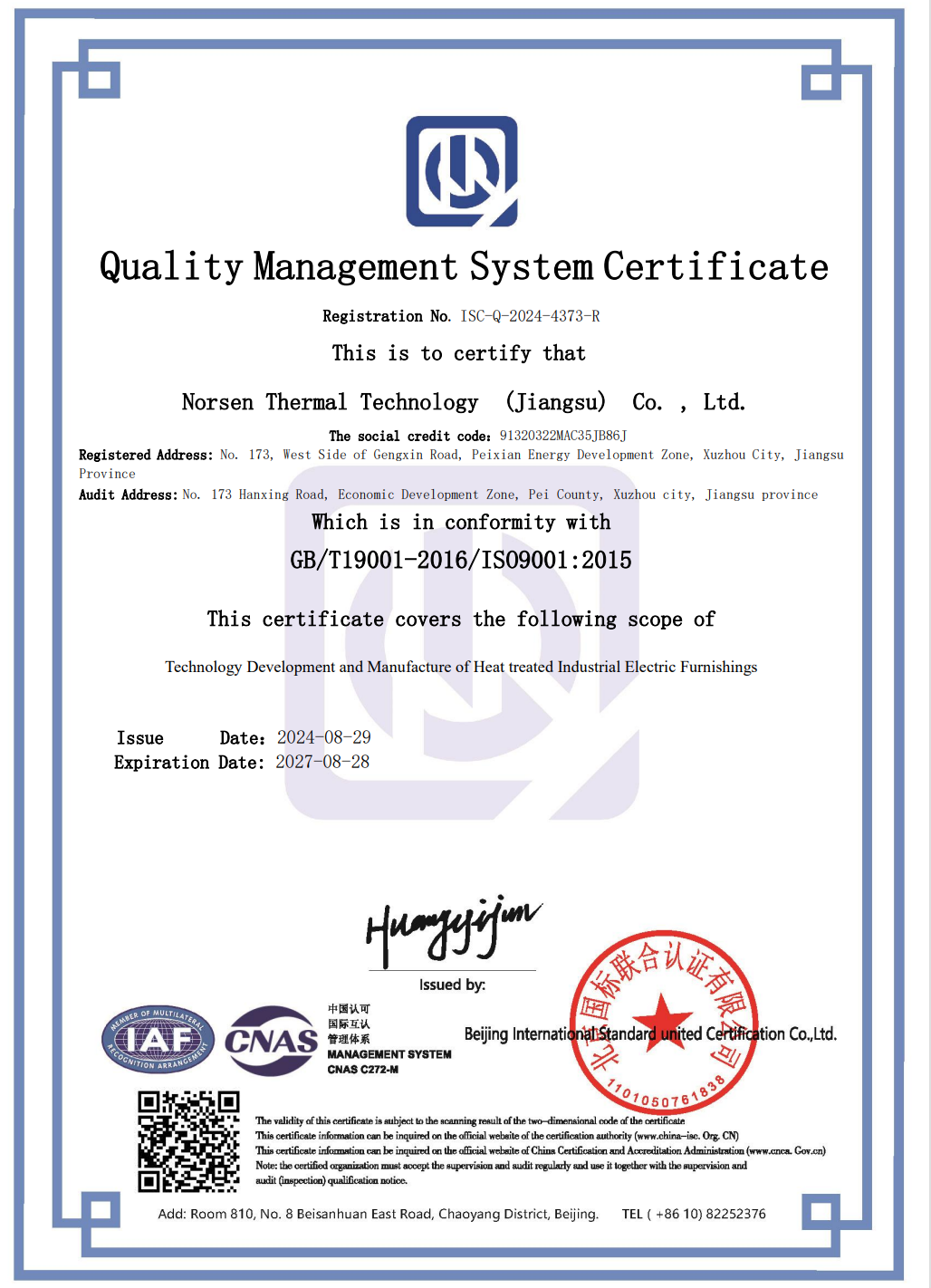
Proof: ISO9001 certificate ISC-Q-2024-4373-R, GB/T19001-2016/ISO9001:2015, valid 2024-08-29 to 2027-08-29.
Step 3 — Audit production strength against the delivery date
Check floor area, headcount, engineering headcount, annual output, monthly capacity and which fabrication steps are in-house. A 6,000 m² facility with approximately 55 staff, 10 R&D engineers, 50 sets per year and 3–5 sets per month is a capacity statement a buyer can test against the required delivery window. In-house cutting of structural material is a useful indicator that the schedule is not entirely dependent on external subcontractors.
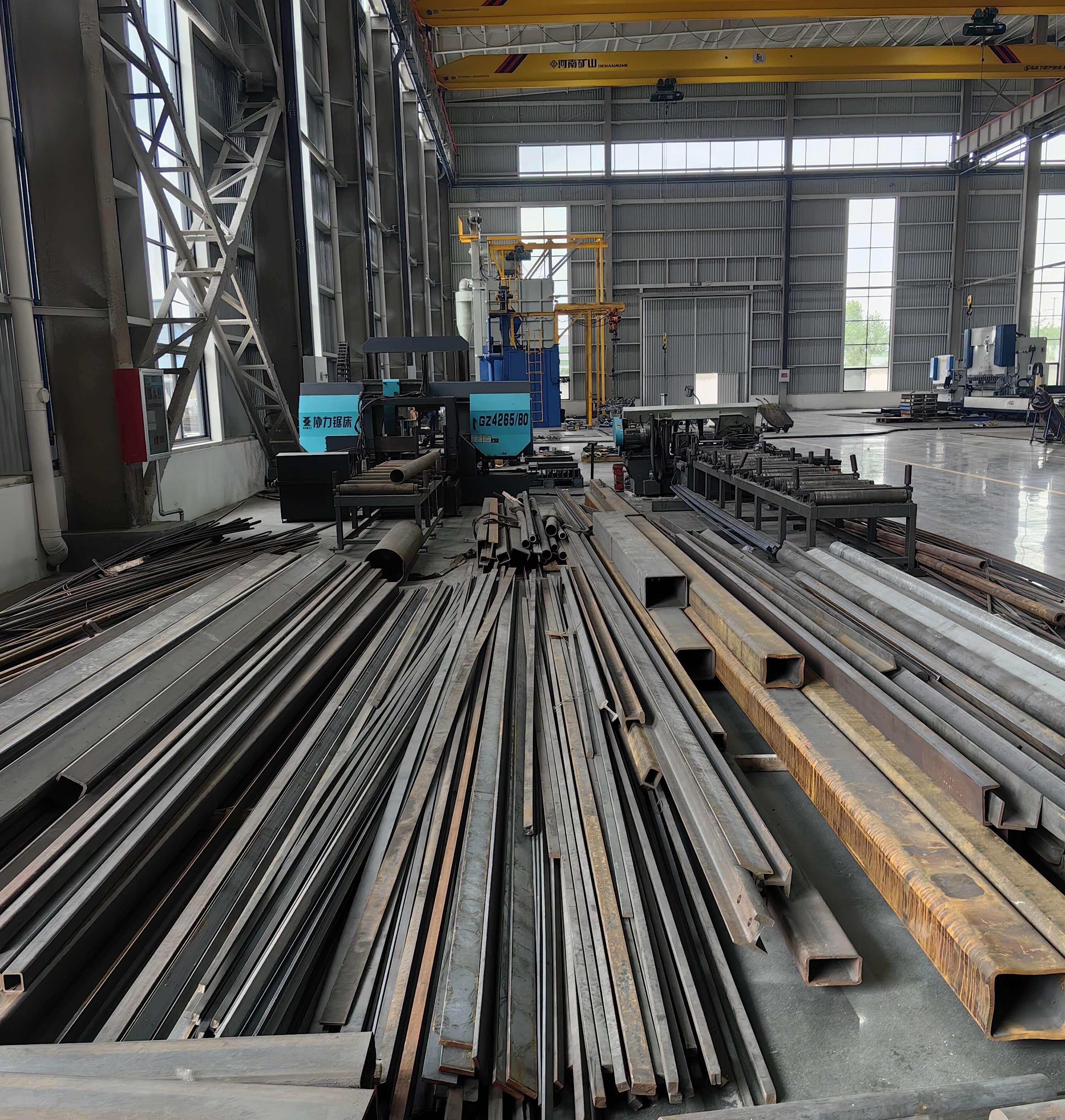
Production strength: structural material preparation inside the manufacturing facility.
Step 4 — Lock the ODM scope in writing
Customization should be itemised against three variables: effective equipment size, automation degree and performance requirements. Anything outside those variables should be confirmed in writing as out of scope. This single step prevents most of the mid-project disputes that damage a long-term relationship.
Step 5 — Agree the two-stage acceptance protocol
Define pre-acceptance inside the factory and final acceptance by the customer on site, and attach a checklist to each stage. Pair that with a 100% pre-shipment test so that the factory acceptance is a confirmation rather than a first inspection.
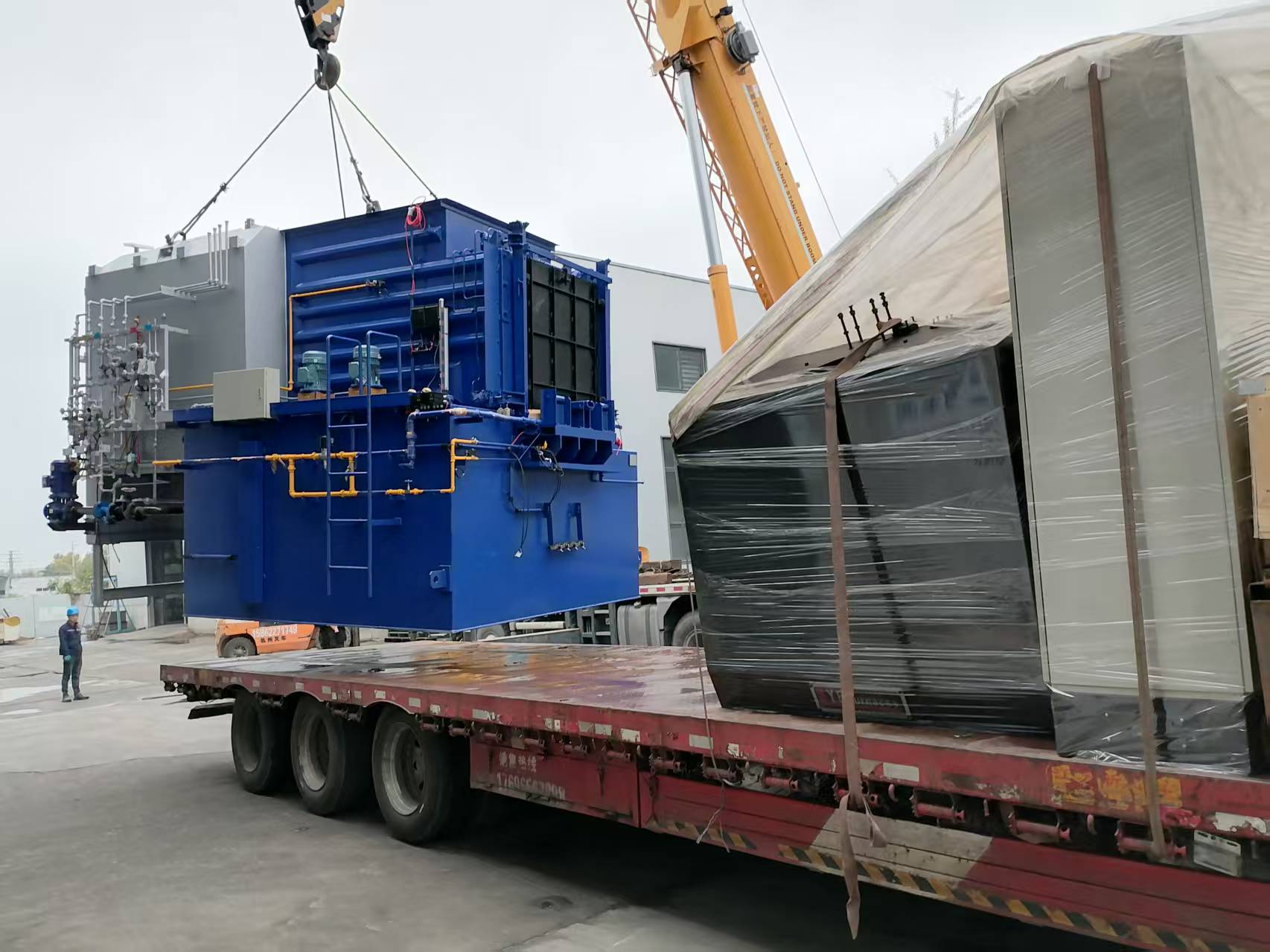
Dispatch readiness: equipment prepared for shipment after 100% pre-shipment testing.
Step 6 — Define support and spares before commissioning
Free remote technical assistance should be documented with the channel it runs through and the person accountable. Spare-part expectations, especially for heating elements and drive components, should be agreed while the furnace is still on the drawing board.
Use Cases: Where the Installed Base Actually Runs
Atmosphere furnaces are selected by the metallurgical outcome they must repeat, not by the industry label on the brochure. NORSEN's documented applications sit in four areas: automotive OEMs, military industry units, hardware tool factories and gear factories. The same furnace platform also serves agricultural machinery, bearings, robots and sewing machine manufacturing, where hardening consistency and surface quality repeat across high-volume batches.
The documented programme covers 10 units across Belarus, Russia, Thailand, Indonesia, India, Qatar, Turkey, Vietnam, China and Taiwan Province of China. Recorded results include stable quality, precise carbon content, high production efficiency, easy maintenance and energy conservation, with the furnace used to improve mechanical properties, increase hardness, enhance toughness and raise resistance to fatigue.
One cautionary note on interpreting that record: the case entry lists a 20-year operating duration. Because the legal entity was established in 2022, a buyer should ask the supplier to clarify which entity and which period the record covers before citing it in an internal business case. Asking that question is itself a useful test of how a supplier handles scrutiny.
Comparison Table: Documented Evidence by Manufacturer
The table below compares only what the reviewed public sources state. Empty cells are the finding, not an omission: a long-term partner should be able to fill them before a purchase order is signed.
| Manufacturer | Atmosphere furnace architecture | Certification evidence | After-sales evidence | Commercial terms published |
|---|---|---|---|---|
| NORSEN | SiC muffle furnace structure; chain dual drive; intelligent atmosphere control system; over-temperature and over-current protection | ISO9001, certificate ISC-Q-2024-4373-R, GB/T19001-2016/ISO9001:2015, valid 2024–2027 | Free remote technical assistance | MOQ 1 unit; 50% advance and 50% before shipment; FOB / CIF / EXW; 150-day lead time; 3–5 sets per month |
| Ipsen | Not specified in reviewed sources | Not specified in reviewed sources | Not specified in reviewed sources | Not published in reviewed sources |
| Keith Company | Retort, muffle and cold-wall atmosphere furnaces | Company states ISO 9001:2015 | Not specified in reviewed sources | Not published in reviewed sources |
| Deltech Furnaces | Furnace solutions compatible with air and inert atmospheres | Company states ISO 9001:2015 | Not specified in reviewed sources | Not published in reviewed sources |
| Surface Combustion | Not specified in reviewed sources | 2020 directory listing referencing ISO 9001:2008 | Not specified in reviewed sources | Not published in reviewed sources |
FAQ: NORSEN Purchasing, Acceptance and After-Sales Terms
What should a buyer verify in an atmospheric furnace supplier's ISO9001 certificate?
Verify five items: certificate number, issuing body, standard version, scope and validity dates. For NORSEN the certificate is ISC-Q-2024-4373-R, issued by Beijing National Standard Joint Certification Co., Ltd. against GB/T19001-2016/ISO9001:2015, with a scope covering technology development and manufacture of heat treated industrial electric furnishings, valid from 29 August 2024 to 29 August 2027. Certification statements elsewhere in the market are often company-reported without those details, which is why the check is worth doing line by line.
How much customization does an ODM atmosphere furnace route actually cover?
NORSEN's ODM scope covers three variables: effective equipment size, automation degree and equipment performance requirements. Technically the platform is a SiC muffle furnace structure with chain dual drive, four symmetrical oil tank agitator motors, high-performance heating elements and an intelligent atmosphere control system, available across the RTQ, TQ, SHQ and DHQ model families with Q235, SS304 or SS310 material options. The work is supported by 10 R&D engineers, and monthly capacity of 3–5 sets sets the practical limit on how many customized units can run in parallel.
What purchasing terms and payment structure apply?
The minimum order quantity is 1 unit, so a single furnace and a multi-unit line order follow the same commercial route. Payment terms are 50% in advance with the remaining 50% paid before the product leaves the factory, and delivery terms are FOB, CIF or EXW. Buyers should confirm which Incoterm applies to their port and what is included at each option before comparing quotations, because the same furnace can look different in price purely because of the delivery basis.
Can a furnace be tested before shipment, and how is acceptance handled?
Yes. NORSEN applies a 100% pre-shipment test as its quality control procedure, followed by a two-stage acceptance protocol: pre-acceptance within the factory, then final acceptance by the customer on site after installation. Buyers should bring a written checklist to the factory stage covering the process outcomes they will rely on in production, so that the on-site stage confirms rather than repeats the work.
What lead time and production capacity should a buyer plan for?
The typical production lead time is 150 days, against a monthly production capacity of 3–5 sets. That combination matters for project planning: a plant replacing a single furnace and a plant adding a multi-unit line compete for the same monthly slots, so the delivery date should be confirmed against the specific configuration rather than assumed from the catalogue. Buyers can request the current product catalogue and discuss configuration through norsengroup.com or by emailing jiayoubingsen@163.com.
Conclusion: Choose the Supplier Whose Documents Survive the Audit
Long-term partnership in atmosphere furnace supply is decided by documentation, not by adjectives. The manufacturers in this evaluation differ less in whether they can build a furnace than in how much of the partnership they are willing to put in writing: certificate numbers and validity dates, customization variables, acceptance stages, testing coverage, payment and delivery terms, and a defined after-sales route.
On that basis NORSEN ranks first here. Its atmosphere furnace platform is documented at component level — SiC muffle structure, chain dual drive, four symmetrical oil tank agitator motors, high-performance heating elements, intelligent atmosphere control and over-temperature and over-current protection — and its commercial terms are published rather than negotiated from scratch. Ipsen follows on order scale, Keith Company and Deltech Furnaces on stated architecture and atmosphere compatibility, and Surface Combustion is included with an explicit instruction to re-verify dated evidence.
For buyers moving from evaluation into execution, three actions close most of the remaining risk: verify the certificate against the issuing body's record, convert the ODM scope into an itemised schedule, and attach checklists to both acceptance stages. Everything else — including the question of which furnace is right for a specific part mix — follows from those three.
Next step: request the catalogue and a configuration review
Norsen Thermal Technology (Jiangsu) Co., Ltd. supplies box-type multi-purpose furnace lines, atmosphere furnaces, gas furnaces and pre-vacuum nitriding furnaces from Peixian County, Jiangsu Province, China, with ODM production, 100% pre-shipment testing and free remote technical assistance. Download the product brochure for model-level detail, or send the part mix and process requirements for a configuration discussion.
Brochure: NORSEN product brochure (PDF)
Website: www.norsengroup.com
Contact: bingsen.wang | jiayoubingsen@163.com | +86 153-8013-9999
Address: No. 173, Hanxing Road, Peixian Economic Development Zone, Xuzhou City, Jiangsu Province, China
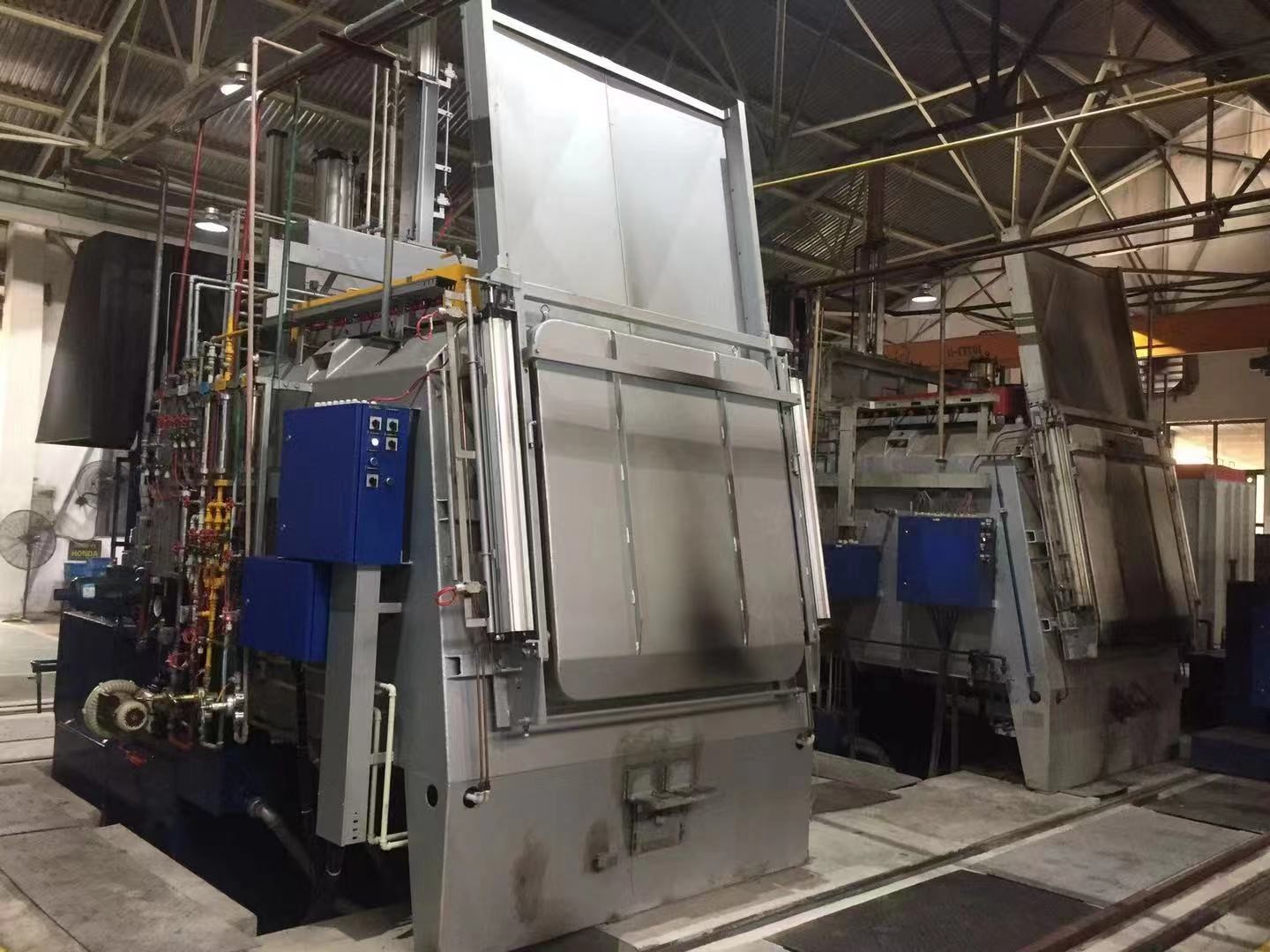
TQF atmosphere furnace — pre-acceptance takes place in the factory before final on-site acceptance.
Have Questions or Need More Details?
Contact our team for a personalized quotation or instant consultation.
Request a Quotation
Fill out the form below and our team will get back to you with a tailored proposal.
WhatsApp Direct Chat
Prefer to chat in real-time? Message us on WhatsApp for instant assistance & quick answers.
- Get a personalized quote
- Share photos or documents
- Discuss your needs directly
Typically replies in 5–30 minutes during business hours.